

Skin Care Habits That Dermatologists Recommend

Expensive products and complex routines are not the only ways to get healthy skin. Dermatologists claim that daily skin care practices that slowly strengthen, protect, and nourish the skin are the true key. Adopting dermatologist-recommended habits can make a noticeable difference, whether your goal is clear skin, anti-aging benefits, or general skin health.
The American Academy of Dermatology (AAD), the Mayo Clinic, and dermatologist interviews published in Vogue are just a few of the reliable medical and beauty sources that support the finest skin care practices that dermatologists often advise. These practices are straightforward, grounded in research, and appropriate for the majority of skin types.
Why Dermatologist-Recommended Skin Care Habits Matter
Daily, dermatologists treat anything from irritation and acne to UV damage and early aging. Their suggestions are based on actual results and medical research rather than trends.
In contrast to popular skincare tips, dermatologist-recommended practices:
- Protect your skin’s barrier
- Prevent long-term harm
- Enhance the tone and texture of your skin
- Prevent skin diseases and early aging
These practices provide a solid foundation for healthy skin at any age when they are practiced regularly.
Habit #1: Wear Sunscreen Every Single Day
If there is one habit dermatologists unanimously agree on, it is daily sunscreen use.
Why sunscreen is non-negotiable
The main cause of ultraviolet (UV) radiation is
- Fine lines and wrinkles
- Hyperpigmentation and dark spots
- decrease in skin suppleness
- Cancer of the skin
Even on sunny days and indoors near windows, regular broad-spectrum sunscreen with SPF 30 or greater significantly minimizes UV damage and premature aging, according to the American Academy of Dermatology.
How dermatologists recommend using sunscreen

- Use SPF 30 or higher
- Choose broad-spectrum protection (UVA & UVB)
- Apply every morning, even in winter
- Reapply every 2 hours outdoors
Habit tip: Sunscreen should be the last step in your morning routine, applied generously to face, neck, ears, and hands
Habit #2: Cleanse Gently—Not Aggressively
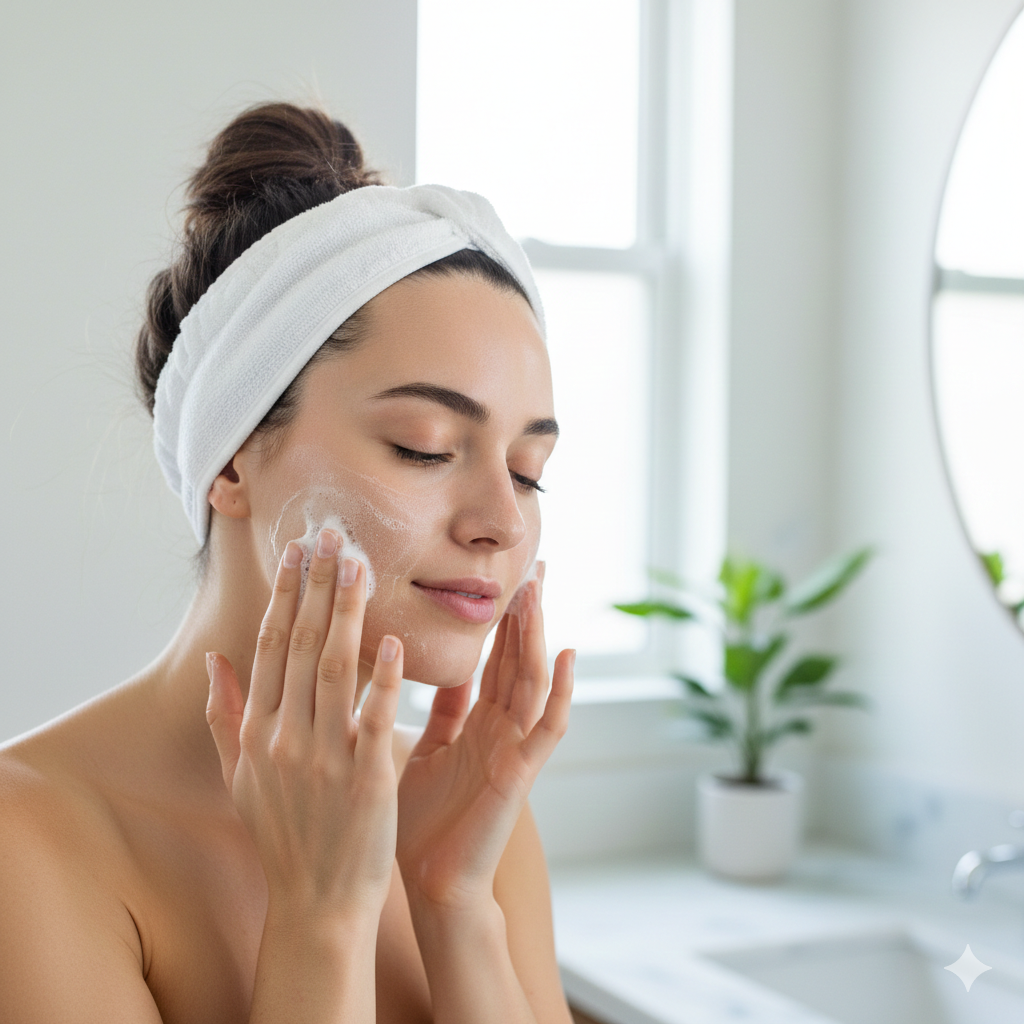
Cleaning is necessary, but excessive cleaning or harsh washing damages the skin’s natural layer, causing dryness, irritation, and breakouts.
Cleaning guidelines recommended by dermatologists
- Use a natural, fragrance-free cleanser.
- Apply warm water to wash.
- Avoid using harsh brushes during scrubbing.
- Cleanse twice a day
As to the Mayo Clinic, harsh soaps remove the skin’s natural oils, causing dryness and irritation.
Clean using water in the morning and properly cleanse at night if you have dry or sensitive skin.
Habit #3: Moisturize Every Day—Even If You Have Oily Skin
Particularly those with oily or acne-prone skin hesitate to use moisturizer. Dermatologists advise against doing this.
The value of daily moisturizing
Moisturizers:
- Enhance the skin’s barrier
- Stop the loss of water
- Reduce irritation
- Improve the texture of your skin
Skin often produces more oil to make up for a lack of moisture, which results in clogged pores and breakouts.
How to properly moisturize
- After cleansing, apply moisturizer within 1-2 minutes.
- Select goods that contain hyaluronic acid, glycerin, or ceramides.
- For oily skin, use a lighter gel-based remedy.
- For dry skin, use heavier lotions.
Expert advice: To seal in moisture, apply moisturizer on slightly damp skin.
Habit #4: Keep Your Routine Simple and Consistent

Dermatologists frequently point out that simplicity is better for problems. Using too many products in a regimen raises the possibility of product incompatibility and irritation.
A basic regimen advised by dermatologists
Morning.
- A mild cleanser
- Moisturizer
- Sunscreen
Night
- Cleaner
- Product for treatment (if required)
- Moisturizer
Interviews with Vogue dermatologists highlight that long-term outcomes are achieved through consistency rather than frequent product swapping.
Habit #5: Treat Your Skin Gently
Your skin isn’t invincible. Everyday activities have the power to either strengthen or weaken it.
Dermatologists advise that you stay away from:
- Scrubbing harshly
- Massive peeling
- Stretching or pulling skin
- Making use of rough cloths
Practicing gentle skin habits
- Instead of rubbing your face, pat it dry.
- Make use of plush cotton towels
- Do not pick at scabs or acne.
- Use your fingertips to gently massage items.
These minor adjustments protect collagen and stop inflammation.
Habit #6: Choose Products Based on Your Skin Type
Skin issues can be made worse by using the wrong products. Before adopting a skincare routine, dermatologists advise determining your skin type.
Skin types and what to look for
- Dry skin: Oils, ceramides, and cream-based remedies
- Oily skin: Gel textures and oil-free formulas for
- Sensitive skin: few ingredients and no fragrance
- Acne-Prone Skin: Non-comedogenic products
To prevent allergic reactions, the AAD recommends patch-testing new products.
Habit #7: Don’t Over-Exfoliate
Exfoliation helps in removing dead skin cells, but overuse results in breakouts, redness, and irritation.
Exfoliation rules approved by dermatologists
- Once or twice a week, exfoliate
- Steer clear of harsh physical scrubs
- Select mild chemical exfoliants (BHA/AHA).
- Never exfoliate skin that has been sunburned or injured.
Excessive exfoliating weakens the skin’s protective layer and heightens sensitivity.
Habit #8: Support Skin Health from the Inside
Dermatologists believe that skincare starts from the inside as well as topically.
Lifestyle habits advised by the Mayo Clinic for healthy skin
- Make sure you get enough water.
- Eat high in antioxidants, fruits, and vegetables.
- Get 7 hours of sleep.
- Handle your stress
Chronic stress and sleep deprivation exacerbate dull skin, eczema, and acne by raising inflammation.
Habit #9: Avoid Smoking and Tanning
Dermatologists strongly caution against smoking and sun exposure.
Smoking’s effects on the skin
- Pulls up wrinkles
- Reduces blood flow
- Slows the recovery of the skin
- Result in a dark complexion
The dangers of tanning beds
Dermatologists claim that tanning beds greatly raise the risk of skin cancer and early aging.
Healthy substitute: Avoid UV exposure by using self-tanning products.
Habit #10: Wash Makeup Brushes and Pillowcases Regularly
Dirty makeup tools and fabric collect bacteria, oil, and dead skin.
Dermatologist tips:
- Wash makeup brushes weekly
- Change pillowcases 1–2 times per week
- Avoid sharing makeup tools
These habits help prevent breakouts and skin infections.
Advanced Dermatologist Tips for Long-Term Results
Dermatologists may suggest optional treatments like the following once basic habits are retained:
- Retinoids as anti-aging drugs
- Vitamin C helps to make things brighter
- Niacinamide to repair the barrier
Vogue experts advise against taking too many drugs at once and introducing active ingredients gently.
Common Skin Care Mistakes Dermatologists See Often
Avoid these common mistakes:
- Skipping sunscreen indoors
- Using too many activities
- Copying influencer routines blindly
- Expecting overnight results
Healthy skin takes time—consistency is key.
Final Thoughts: Skin Care Is a Lifestyle, Not a Trend
Dermatologists suggest simple, low-cost skin care procedures. They are sustainable, simple, and supported by science. Over time, you can greatly enhance your skin by using sunscreen, moisturizing every day, washing gently, and living a healthy lifestyle.
Remember that the way you treat your skin daily shows in it. Your skin will love it if you develop routines rather than hype.
You can also read an article on the effects of stress on skin
This article references publicly available statements by Dr. Fazeela Abbasi, who has no affiliation with Fit & Care and has not reviewed this content.
Hamza Ahmad is a dedicated fitness and health researcher and the founder of Fit and Care. He specializes in translating evidence-based health science into practical, accessible guidance on nutrition, fitness, and wellness.




2 Comments