

Diabetes Affects on the Body by Age
Introduction
Diabetes affects on the body by age, from early childhood through older adulthood. It is one of the fastest-growing chronic diseases worldwide, yet it is often discussed in general terms without considering age-specific impacts. In reality, age plays a critical role in how diabetes affects the body. Hormonal changes, growth and development, metabolic shifts, and lifestyle factors all influence how the disease presents, progresses, and is managed during different phases of life
Knowing how diabetes impacts children, teenagers, adults, and the elderly can help in early diagnosis, better management, and identification of problems to avoid.
Here, the symptoms, risks, and practical ways to care for diabetes through nutrition, exercise, and lifestyle choices are discussed. Besides, it talks about the effect of diabetes on the body at different ages.
What Is Diabetes?
A metabolic issue called diabetes affects the body:
Lack of sufficient production of insulin, or
able to properly use insulin
Insulin helps in regulating glucose, or blood sugar. It damages organs and tissues when blood glucose levels stay high for a long amount of time.
Common Types of Diabetes
- Type 1 Diabetes—autoimmune, often diagnosed in childhood
- Type 2 Diabetes—lifestyle-related, common in adults
- Gestational Diabetes—occurs during pregnancy
How Diabetes Affects Children and Teenagers
Child diabetes can often be unexpected and emotionally demanding.

Physical Effects
- Growth and puberty are delayed
- Frequent infections
- Weakness and tiredness
- Increased urination and thirst
Normal physical growth may be affected by uncontrolled levels of blood sugar.
Mental & Emotional Impact
- Stress and anxiety
- Having trouble concentrating on school
- Dependence on caregivers on an emotional level
Long-Term Risks
- Early damage to the nerves
- Difficulties with the eyes
- If kidney stress is not properly controlled
Effects of Diabetes on Young Adults (Ages 20–40)
Young adults are vulnerable to neglect, as they are often “too healthy” to be worried about diabetes.

Common Effects
- Resistance to insulin
- Weight Gain
- An imbalance of hormonal
- Reduced stamina
Lifestyle Challenges
- Poor eating choices
- Sleep disturbances
- Boredom and stress
Health Risks
- Cardiovascular disease in its early stages
- Difficulties with fertility
- Mental health issues
How Diabetes Affects Middle-Aged Adults (40–60)
This age group is usually treated for type 2 diabetes.

Body-Wide Effects
- High blood pressure
- Higher cholesterol levels
- Lower metabolism
- An increase in belly fat
Organ Damage Risks
- Heart diseases
- Damage to the kidneys
- Pain in the nerves (neuropathy)
Diabetes causes the start of chronic illnesses and aging if left untreated.
Effects of Diabetes on Older Adults (60+)
Diabetes may significantly decrease a senior’s quality of life.

Physical Effects
- Loss of muscle
- Problems with balance
- Loss of vision
- Slow healing of wounds
Cognitive Impact
- Deterioration in memory
- An elevated risk of dementia
- An increased probability of depression
Increased Complication Risk
- A stroke
- Amputation
- Failure of the kidneys
How Diabetes and Its Effects on the Body at Different Ages (Comparison Table)
| Age Group | Common Diabetes Type | Main Body Effects | Key Health Risks | Management Focus |
|---|---|---|---|---|
| Children & Teens (0–19) | Type 1 (mostly) | Delayed growth, fatigue, frequent urination | Growth issues, early nerve damage | Blood sugar monitoring, balanced nutrition |
| Young Adults (20–40) | Type 2 (increasing) | Weight gain, insulin resistance, low energy | Hormonal imbalance, heart disease | Lifestyle changes, stress management |
| Middle Age (40–60) | Type 2 (common) | High BP, slow metabolism, nerve pain | Heart disease, kidney damage | Diet control, regular exercise |
| Older Adults (60+) | Type 2 (chronic) | Muscle loss, vision decline, memory issues | Stroke, amputation, dementia | Medication adherence, gentle activity |
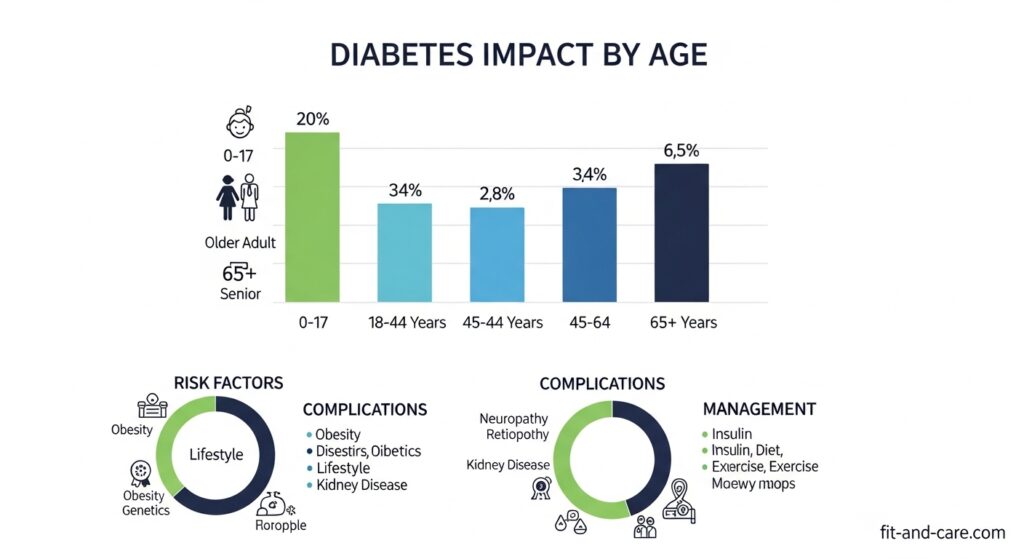
Long-Term Complications of Diabetes (All Ages)
Diabetes may occur in a few cases when blood sugar is not under control:
- Heart disease
- Damage to the nerves.
- Kidney disease
- issues with the eyes (retinopathy)
- Foot infections and ulcers
Diabetes is a major global cause of avoidable blindness, kidney failure, and cardiovascular disease, according to the World Health Organization.
Diabetes Impact Comparison Chart (By Age)
| Health Factor | Children | Young Adults | Middle Age | Seniors |
|---|---|---|---|---|
| Blood Sugar Instability | 🔴 High | 🟠 Moderate | 🟠 Moderate | 🔴 High |
| Risk of Complications | 🟡 Low | 🟠 Medium | 🔴 High | 🔴 Very High |
| Lifestyle Influence | 🟢 High | 🟢 Very High | 🟠 Medium | 🟡 Low |
| Recovery Speed | 🟢 Fast | 🟢 Fast | 🟠 Slow | 🔴 Very Slow |
| Quality of Life Impact | 🟠 Medium | 🟠 Medium | 🔴 High | 🔴 Very High |
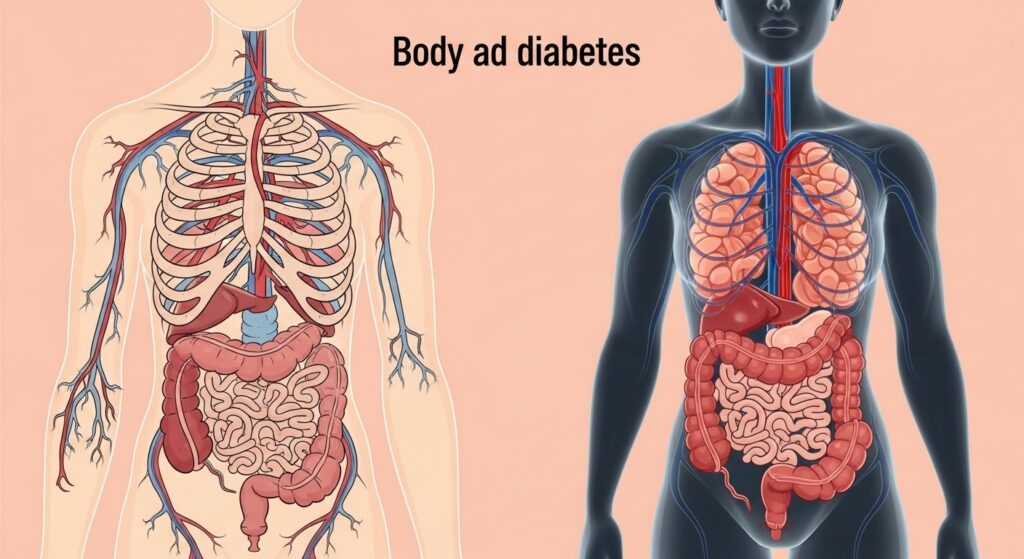
Legend:
🟢 Low / Positive
🟡 Mild
🟠 Moderate
🔴 Severe
Prevention and Management Tips by Age
Children and Teens
- Healthy meals
- Regular glucose monitoring
- Support on an emotional level
Young Adults
- Managing weight
- Stress control
- Regular exercising
Middle Age
- A diet low in GI
- Strength training
- Routine wellness checks
Senior citizens
- Light physical activity
- Prevention of falls
- Management of medicines
Changes in lifestyle are the foundation of managing diabetes at any age, according to the American Diabetes Association.
Role of Diet, Fitness, and Lifestyle
Diabetes complications can be greatly reduced by adopting healthy habits:
- Whole foods over sugar that is processed
- Regular physical activity
- Adequate Sleep
- Reduction in stress
At any age, you can heal your body via small, regular changes.
You can check your body’s needs by visiting Signs Your Body Needs More Nutrients.
When to See a Doctor
Consult with a healthcare expert if you notice:
- Frequent urination or thirst
- Sudden changes in weight
- Vision blur
- Feels numb or tingly
Life is saved by early diagnosis.
Final Thoughts
Not everyone is impacted by diabetes in the same way. Age has an important impact on the impact of the illness on the body, which ranges from cognitive decline in elders to growth issues with young children.
The good news? Patients with diabetes can lead long, healthy, and active lives at any age with prevention, a good diet, exercise, and medical attention.