
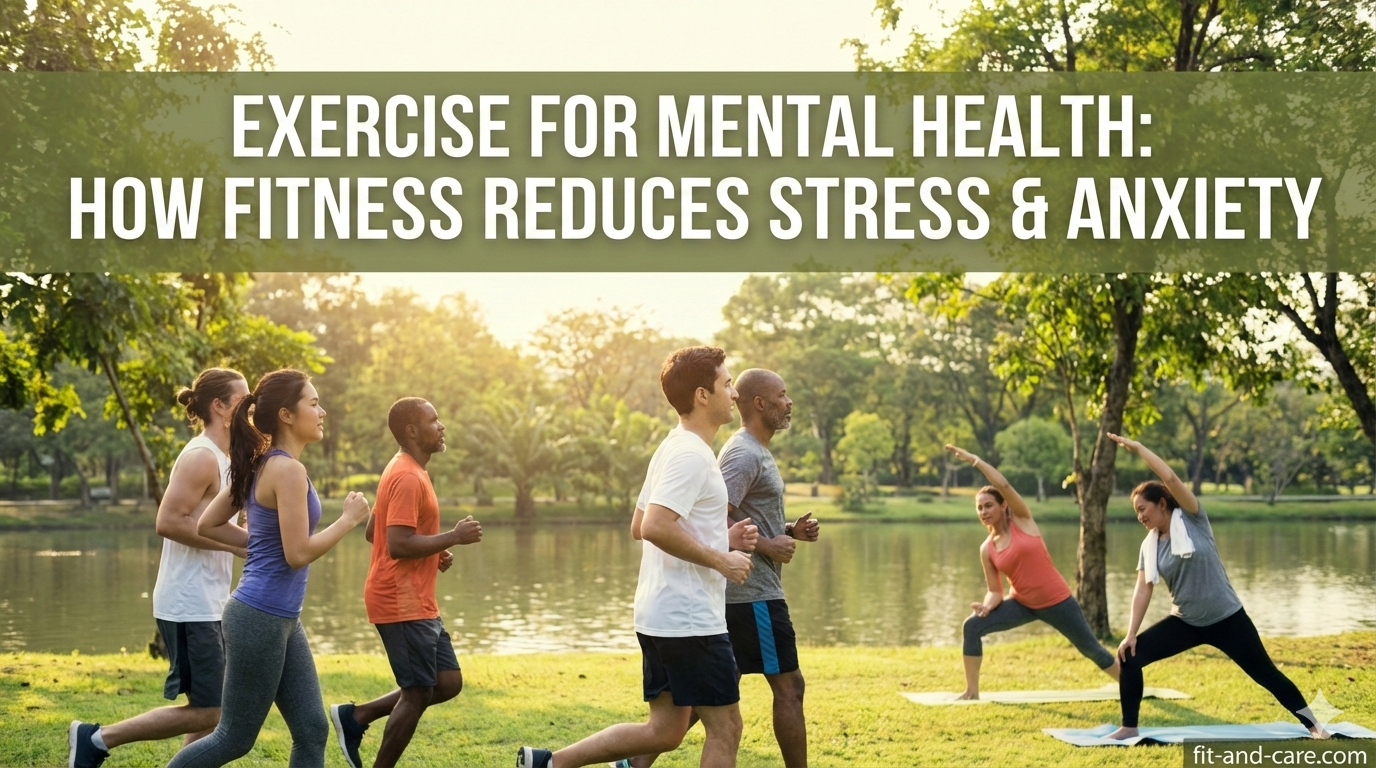
Exercise for Mental Health
The fast-paced society we live in has led to an increase in mental health problems like stress, anxiety, and depression. Among the causes of emotional exhaustion are very long working hours, nonstop screen time, economic stress, and a lack of sleep. Just one of the most powerful and natural methods of mental health enhancement is exercise; however, it is frequently brushed aside, even when therapy and medicine are indispensable tools.
Regular exercise is not only necessary for keeping one’s physical condition in good shape, but it also has a great impact on one’s mood, helps reduce stress levels, and controls anxiety. To name a few, numerous scientific studies have shown that exercise affects brain chemistry, emotional stamina, and overall psychological health.
Firstly, we discover the best stress-relieving exercises through which you can relax your mind and calm down your anxiety. Next, we present some research that serves as evidence of the positive impact of exercise on mental health. At the end of the article, we suggest some easy steps by which you can add more movement to your everyday life.
Understanding Mental Health and Its Importance
Our emotional, psychological, and social well-being is known to as mental health. It effects how we think, moods, actions, stress management, social connections, and decision-making. People who are in good mental health are better able to handle everyday hurdles, work efficiently, and keep up positive connections.
When mental health gets worse, humans might come across:
- Prolonged stress
- Panic attacks and anxiety
- Depression or a low mood
- Disturbances in sleep
- Restless and depressed
Ignoring mental health issues can have long-term negative effects on one’s body and emotions. Exercise and other preventive and supporting measures are crucial because of this.
The Connection Between Exercise and Mental Health
For good reason, exercise is frequently referred to as “natural medicine” for the mind. Mental health is directly benefited by physical activity because it triggers biological and psychological processes
Brain Chemistry and Exercise
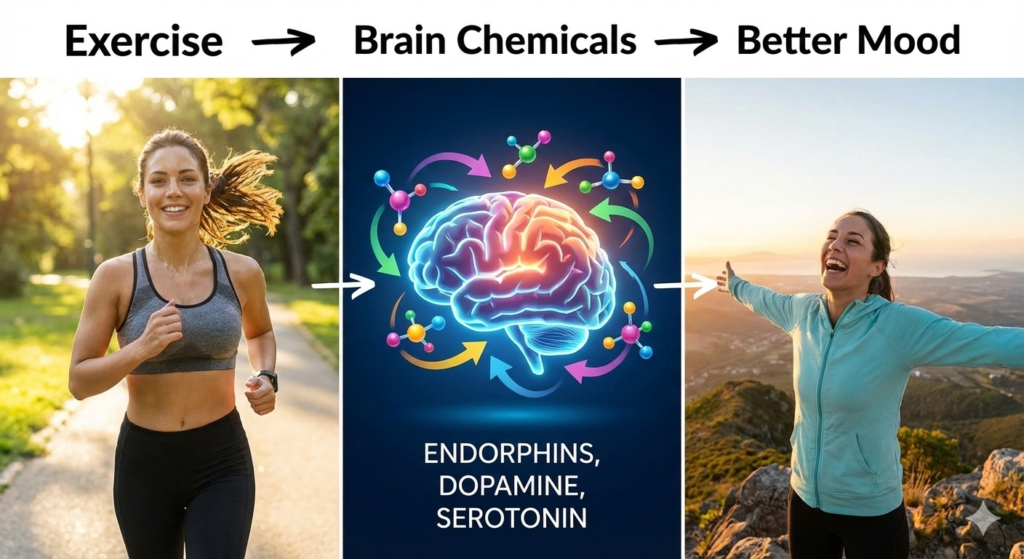
Your brain releases positive and anxiety-reducing hormones when you exercise, such as:
Endorphins are organic compounds that promote happiness and calm.
Serotonin: Promotes emotional stability, sleep, and mood regulation
Dopamine: increases enjoyment, motivation, and focus
Exercise also reduces stress hormones that cause the body’s fight-or-flight reaction, such as cortisol and adrenaline.
Many people report feeling happier, calmer, and more mentally clear after engaging in physical activity, which can be explained by these hormonal changes.
How Exercise Reduces Stress
Stress is the body’s reaction to pressures or threats that can be either mental or physical. Long-term stress, according to the information, is very harmful to one’s health, both physically and emotionally, while in a short period of time, stress can still be of some benefit.
How Exercise Lowers Stress:
- Hormones that are released during exercise help to release the physical tension that the muscles have stored.
- Exercise greatly improves sleep quality, which is very important for stress recovery.
- Regular exercise keeps you full of energy and helps to get rid of the tiredness caused by stress.
- Physical activity, which is also a great mental distraction, helps to relieve the mind from its own problems.
When performed regularly, even low-intensity exercises such as stretching or walking can have a significant impact on stress reduction.
Exercise and Anxiety: What the Research Shows
One of the most common mental health issues in the world is anxiety disorders. Excessive concern, restlessness, racing thoughts, and physical anxiety are common symptoms.
Regular exercise lowers anxiety symptoms by improving emotional regulation and raising stress tolerance, according to research published in peer-reviewed medical journals. Both mind-body exercises like yoga and physical activities like walking or cycling are excellent.
Why Exercise Works for Anxiety
- Improves breathing and heart rate stability
- Lowers dependence on stress
- Increases self-efficacy and confidence
- Supports awareness of the present moment and mindfulness
Exercise often enhances overall results and complements expert mental health treatment.
Exercise as a Support Tool for Depression
Continuous sadness, low energy, lack of interest, and hopelessness are common signs of depression. Exercise is a useful supportive method, but it cannot take the place of therapy or medical care.
The Mayo Clinic states that regular exercise:
- Increases mental balance and mood
- Increases self-worth and trust
- Supports better sleep
- Reduces fatigue and mental fog
A study shows that for some people with mild or moderate depression, regular exercise may be as useful as antidepressants.
Best Types of Exercise for Mental Health
Not all the exercises are hard and intense. You should choose the activities that you can enjoy and perform continuously.

1- Cardio Exercise
Examples:
- Walks
- Running.
- Biking a bike
- Swimming
- Dancing
Benefits
- lowers anxiety and tension
- Improves mood
- strengthens brain function
Mental health can be greatly improved by even 20 to 30 minutes of moderate cardio, three to five times a week.

2- Mental and Body Exercises
Example:
- Yoga
- Tai Chi
- Pilates
- Stretches
Benefits
- Relaxes the nervous system
- Increases the control of emotions
- Enhances relaxation and mindfulness
Those who deal with anxiety, trauma, or long-term stress will find these exercises very useful.
3- Physical strength exercises
Examples
- Exercises using own body Weight
- Using Resistance Band
- Lifting Weights
Benefits
- Increases self-assurance
- lessens the signs of depression
- increases body awareness
Additionally, strength training increases resilience by making people feel both psychologically and physically stronger.
4- Regular Exercise
You can support mental wellness without going to the gym. Activities such as:
- Using the stairs
- gardening
- Chores around the house
- Talking on the phone while walking
When done regularly, all of these increase emotional well-being.
How to Start Exercising for Better Mental Health
To reduce stress and anxiety, exercise plays a crucial role, but maintaining consistency is equally important.
Practical:
- A 10-15-minute plan
- Enjoyable activity
- Self-feeling is more important than performance
- Achieve goals by being real
- Be patient
Combining Exercise with Other Mental Health Practices
Healthy habits play an important role in relaxing exercise, such as
- Good Sleep
- Balanced Diet
- Yoga
- Breathing exercise
- Social Relations
According to the Mayo Clinic, combining movement with relaxation techniques enhances emotional well-being.
Overcoming Common Barriers
Many people failed in their exercise routine
- Lack of Time Management
- Demotivation
- Fear of losing
- Stress and anxiety
To overcome these barriers, some of the following steps are
- Scheduling and time management
- Home-based exercises
- Self-feeling is more important than performance
- Enjoy a small win
Final Thoughts: Movement Is Medicine for the Mind
Exercise is one of the finest, most cost-effective, and simplest ways to enhance mental health. No matter what type of trouble you might be in, such as daily stress, anxiety, or depression, regular exercise will bring back your stability, raise your spirits, and generally enhance your quality of life.
You don’t need to lift or run long distances. A straightforward, purposeful act will suffice to rejuvenate both your body and mind.
There’s no better time than now to start moving if you’re after a natural mental health boost. Your brain will be delighted.
You can also read about Natural food for fitness.






2 Comments