
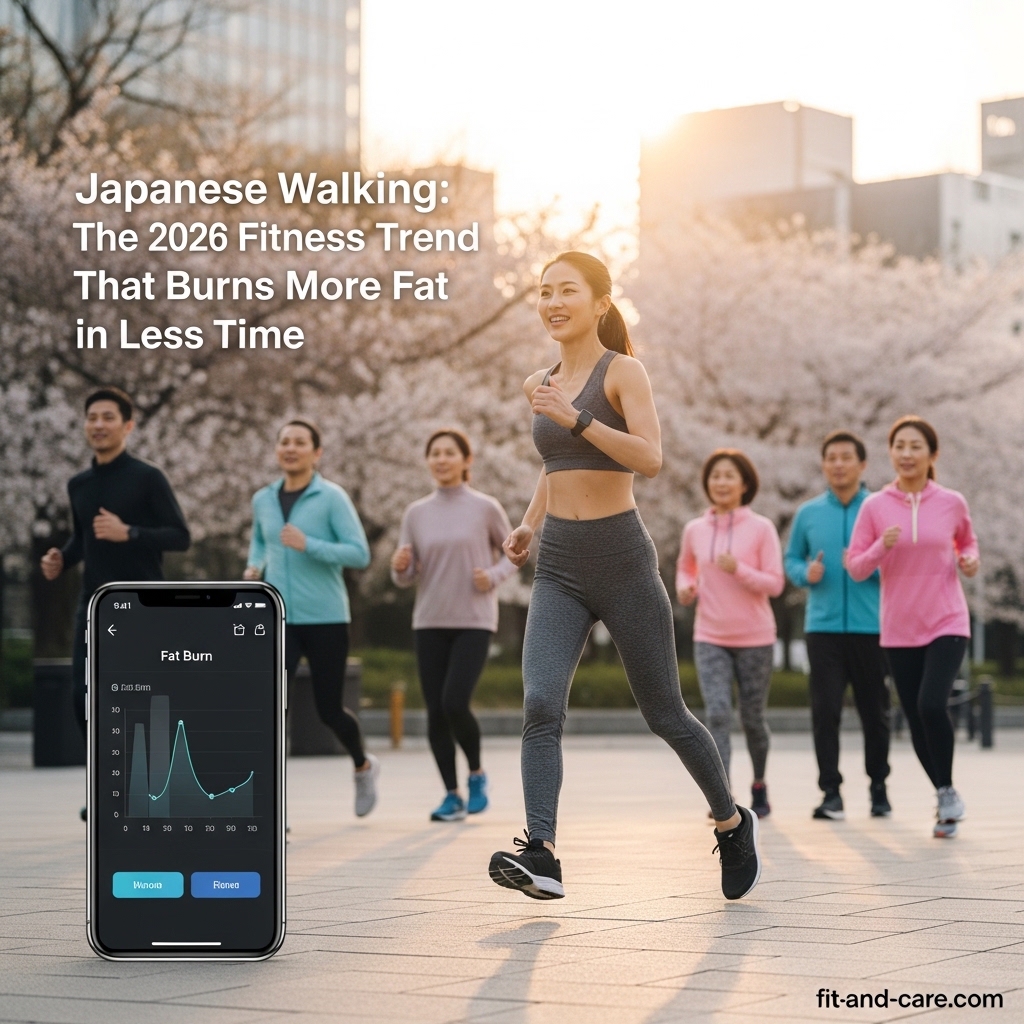
Japanese Walking vs. Regular Walking


Japanese Walking: The 2026 Fat-Burning Trend That’s Changing How We Exercise
Without a gym, without equipment, without changing the duration of time you spend walking, imagine burning a lot more fat than a normal stroll. The Japanese walking tackle promises exactly that. And the world finally took notice in 2026.
One of the quickest-growing fitness trends in the world, Japanese walking has seen an amazing 2,986% rise in search interest in the last year. Yet, this isn’t a social media ploy. Its start may be found in a peer-reviewed 2007 paper from Shinshu University in Japan, and the science behind it is quite impressive.
At Fit-and-Care, we believe in fitness that fits real life. Japanese walking does exactly that. In this complete guide, you will learn what Japanese walking is, how to do it correctly, what science says about its benefits, and how to start today—no matter your fitness level.
What Is Japanese Walking? (The Science-Backed Method Explained)
Researchers at Shinshu University in Nagano, Japan, invented the structured walking technique known as Japanese walking, or interval walking training (IWT). Japanese walking alternates between a pair of distinct effort levels, in contrast to standard walking, when you keep a steady, easy pace throughout:
- Walk fast for 3 minutes, which is at about 70% of your full aerobic capacity. You should be quite challenged, breathing hard, yet able to speak in short words.
- Walk leisurely and comfortably for 3 minutes at a pace that is roughly 40% of your full aerobic capacity (a mild recovery pace).
It is urged to retake these 6-minute cycles five days a week for a minimum of 30 minutes. Participants who stuck to this interval walking routine for five months noticed significantly greater improvements in blood pressure, leg strength, and aerobic fitness than those who walked slowly for the same total time, as in accordance with research published in the Mayo Clinic Proceedings.
The significant conclusion is that walking fast all the time is not the answer. Your body’s adaptive reply occurs through the deliberate shift between hard and easy workouts, which promotes metabolic health, improves cardiovascular efficiency, and burns more fat than normal walking.
7 Proven Benefits of Japanese Walking for Weight Loss and Overall Health
Burns Significantly More Body Fat
Your body stays guessing by the alternating speed of Japanese walking. Glycogen burns during quick intervals. Your body turns to fat oxidation during slow healing. Your body learns to access stored fat more effectively over time as a result of this metabolic change; regular, steady-state walking fails to offer the same advantages.
Improves Cardiovascular Health
Participants who adopted the Japanese walking pattern for five months boosted aerobic capacity (VO2 max) by 10%, over twice as high as those who went at a steady pace, according to the first Shinshu University study. One of the best markers of long-term heart wellness and longevity is a higher VO2 max.
Lowers Blood Pressure Naturally
An epidemic of high blood pressure remains unchecked. Without adjusting their medication, IWT participants in the same long-term study saw measurable declines in their blood pressure levels. Due to this, Japanese walking is a very successful approach for those with metabolic syndrome or hypertension.
Builds Functional Leg Strength
The hard intervals of Japanese walking work the quads, hamstrings, and glutes more intensely than normal flat-surface walking. Leg-press strength grew by 17% for the research group, which is very significant for senior citizens who wish to maintain their mobility and prevent falls.
Boosts Mood and Reduces Stress
Compared to a low-in steady walking, interval walking’s rhythmic intensity changes cause a greater release of serotonin and endorphins. In addition, participants in some IWT studies reported better psychological well-being and lower depressive scores, which is in line with the mind-body concept that Fit-and-Care preaches.
Improves Insulin Sensitivity and Metabolic Health
Some of the main causes of weight gain and metabolic dysfunction are post-meal blood sugar rises. Japanese walking has been shown to improve insulin sensitivity and reduce glucose peaks when performed after meals. For anyone with Type 2 diabetes, pre-diabetes, or just trying to keep stable energy levels throughout the day, this is a good thing.
Sustainable and Zero-Cost
The most underrated advantage is how Japanese walking doesn’t need equipment, a gym membership, a specific diet, or a major shift in lifestyle. All you need is a 30-minute window and comfortable walking shoes. This reach is a benefit in a world where time is key.
How to Do Japanese Walking: A Step-by-Step Beginner Guide

Getting started with Japanese walking is refreshingly simple. Here is exactly how to do it:
- Warm Up (5 minutes): Start with 5 minutes of casual, comfortable walking to prepare your joints and muscles.
- Begin Your Intervals: Walk FAST for 3 minutes. Your breathing should be noticeably heavier — you can talk in short sentences but not hold a full conversation. This is approximately 70% of your max effort.
- Recover: Walk SLOW for 3 minutes. Drop to a gentle, comfortable pace. Use this time to catch your breath and let your heart rate come down slightly. This is approximately 40% of your max effort.
- Repeat: Continue alternating 3 minutes fast, 3 minutes slow for a total of 30 minutes (5 complete cycles). Aim for 5 sessions per week for the best results.
- Cool Down (5 minutes): Finish with 5 minutes of easy walking and gentle stretching of your calves, hamstrings, and hip flexors.
Total time per session: 40 minutes (including warm-up and cool-down).
Japanese Walking vs. Regular Walking: What’s the Difference?
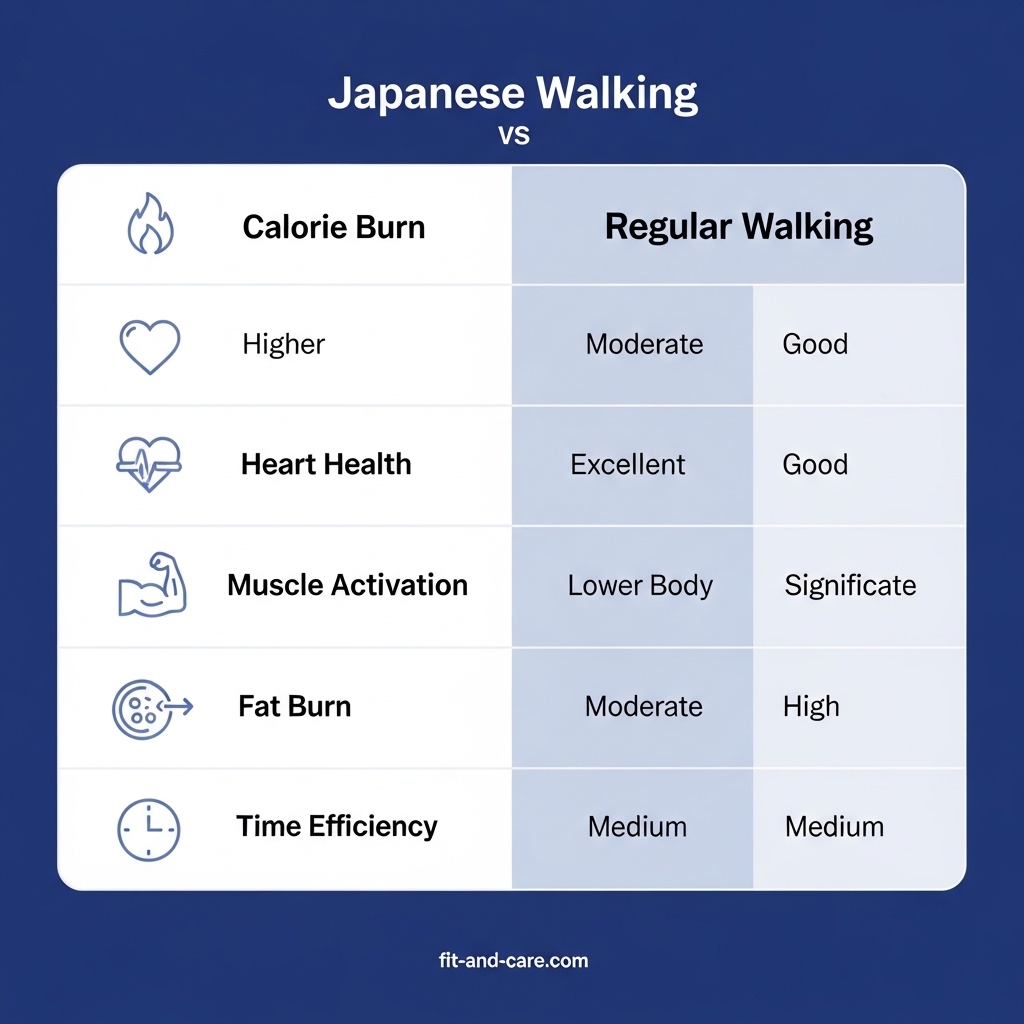
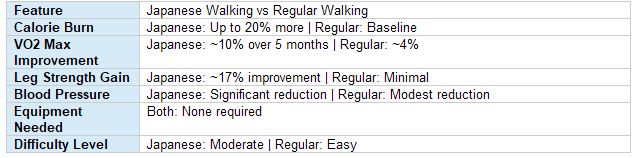
Source: Mayo Clinic Proceedings — Shinshu University Interval Walking Study, 2007.
Who Should Try Japanese Walking? (And Who Should Be Cautious)
Japanese walking is suitable for a wide range of people:
⦁ Beginners who want a structured entry into fitness without the intimidation of gym workouts
⦁ People over 40 looking to improve cardiovascular health and maintain leg strength as they age
⦁ Those managing weight, pre-diabetes, or metabolic syndrome under medical guidance
⦁ Busy professionals who can only spare 30–40 minutes for exercise
⦁ Anyone recovering from sedentary periods who needs a gradual, low-impact progression
However, you should consult your doctor before starting if you have any of the following conditions:
⦁ Uncontrolled heart disease or recent cardiac events
⦁ Severe joint pain, osteoarthritis, or recent lower-body injuries
⦁ Unmanaged diabetes with blood sugar instability
Your 30-Day Japanese Walking Plan for Beginners
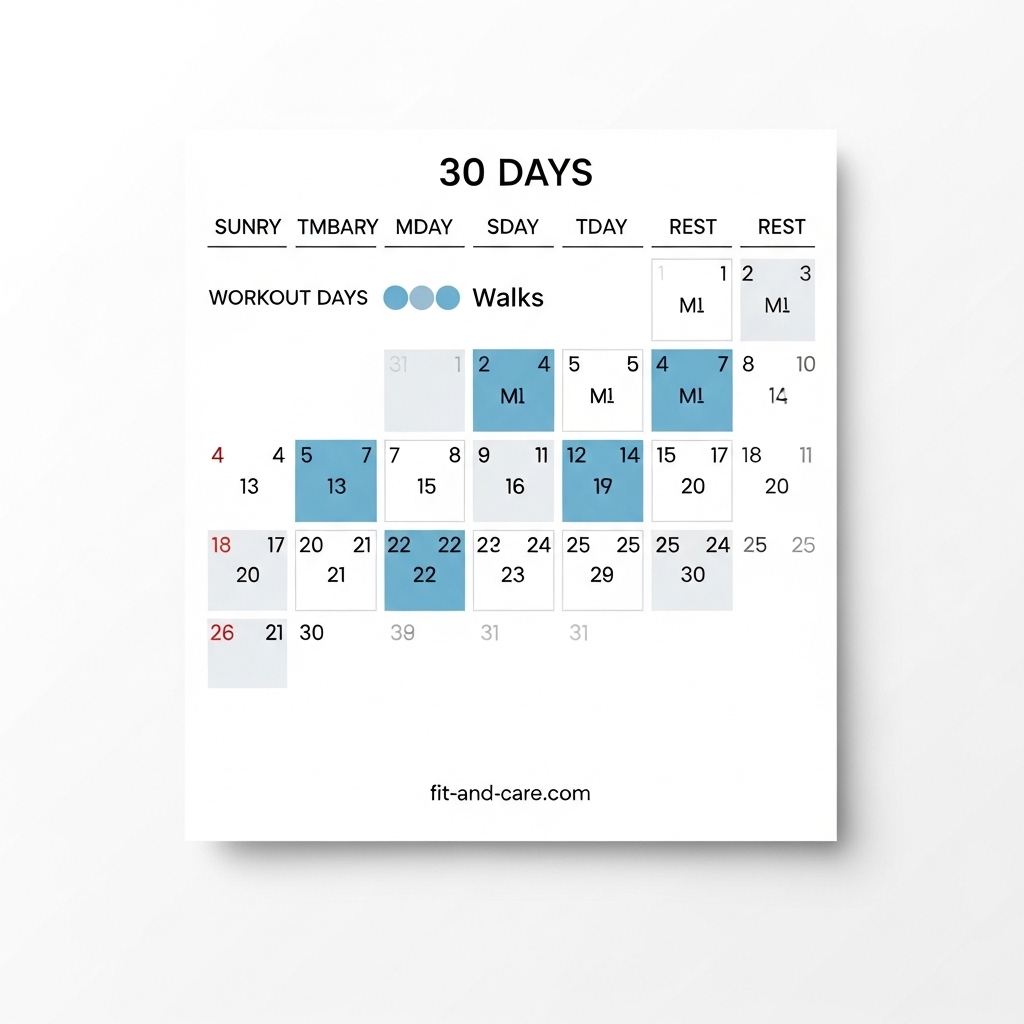
Week 1–2: Build the Habit
Aim for 3 sessions per week. Keep your ‘fast’ intervals at a pace that challenges you but doesn’t exhaust you. Focus on consistency over intensity. Duration: 30 minutes with intervals.
Week 3–4: Increase Frequency
Move to 4–5 sessions per week. Your body should now be adapting — the fast intervals will begin to feel more manageable. You can try slight inclines to add challenge without changing the structure.
After 30 Days: Measure Your Progress
⦁ Note your resting heart rate (it should be lower)
⦁ Observe your energy levels during the day
⦁ Track any changes in waist measurement or how your clothes fit
⦁ Reassess how your fast-interval pace compares to Day 1
Expert Perspective: Why Health Professionals Recommend Japanese Walking
The Fit-and-Care editorial team researches every recommendation using peer-reviewed scientific literature. Japanese walking’s benefits are not anecdotal — they are backed by over a decade of clinical research.
⦁ The original 2007 Shinshu University study followed 246 middle-aged and older adults across multiple Japanese communities — making it one of the largest real-world interval walking trials ever conducted.
⦁ The ACSM (American College of Sports Medicine) ranks wearable-guided walking programs among the top fitness trends for 2026, validating the science-backed, low-barrier approach at the heart of Japanese walking.
⦁ Researchers noted that participants who combined IWT with regular self-monitoring maintained their results far more effectively than control groups — underscoring the power of structure in any walking routine.
Frequently Asked Questions (FAQ)
Q1: How is Japanese walking different from regular walking?
Regular walking maintains a consistent, comfortable pace throughout. Japanese walking alternates between 3 minutes of vigorous effort (70% of max aerobic capacity) and 3 minutes of slow recovery (40%). This interval structure produces significantly greater improvements in fitness, fat burning, and blood pressure compared to steady-state walking of the same duration.
Q2: How many calories does Japanese walking burn compared to normal walking?
Research indicates that Japanese walking can burn up to 20% more calories in the same time period as regular walking, due to the elevated metabolic demand during fast intervals and the ‘afterburn effect’ (EPOC — excess post-exercise oxygen consumption) that follows high-intensity bouts.
Q3: Can beginners do Japanese walking?
Absolutely. Japanese walking is one of the most beginner-friendly interval workouts available. The ‘fast’ pace is relative — it just needs to be significantly faster than your slow pace. Even a brisk walk versus a gentle stroll qualifies. Start with 3 sessions per week and build from there.
Q4: Can Japanese walking help with weight loss?
Yes. Japanese walking improves fat oxidation (fat burning), increases metabolic rate, and — when combined with a balanced diet — supports sustainable weight loss. It is particularly effective for visceral fat reduction, which is the most health-damaging type of fat stored around the organs.
Q5: Is Japanese walking safe for seniors and older adults?
Yes, and it was specifically tested on middle-aged and older adults in the original research. The slow recovery intervals make it much gentler than running-based HIIT. However, older adults with cardiovascular conditions, joint problems, or balance issues should consult their physician before starting.
Final Thoughts: Is Japanese Walking Worth Trying in 2026?
The evidence is clear: Japanese walking is not a fleeting trend. It is a scientifically validated, accessible, and highly effective fitness method that fits the real lives of real people. Whether you want to lose weight, lower your blood pressure, boost your mood, or simply move your body more consistently, interval walking gives you more return on your time investment than any other walking approach.
At Fit-and-Care, we believe the best workout is the one you will actually do. Japanese walking asks for just 30 minutes, five days a week, and zero equipment. If there is one thing you take away from this article, let it be this: start today. Pick a route, set a timer, and take your first fast interval. Your body — and your future self — will thank you.
Disclaimer: This content is for informational purposes only and is not medical advice.
Sources & References
- Nemoto K, et al. (2007). Effects of high-intensity interval walking training on physical fitness and blood pressure in middle-aged and older people. Mayo Clinic Proceedings.
- World Health Organization. (2020). Physical Activity Guidelines for Adults. WHO.int
- Harvard T.H. Chan School of Public Health. The Nutrition Source — Healthy Weight.
Reviewed by Rizwan Aftab Ahmad, Registered Dietitian. This content is for educational purposes only and is not medical advice.
Hamza Ahmad is a dedicated fitness and health researcher and the founder of Fit and Care. He specializes in translating evidence-based health science into practical, accessible guidance on nutrition, fitness, and wellness.