
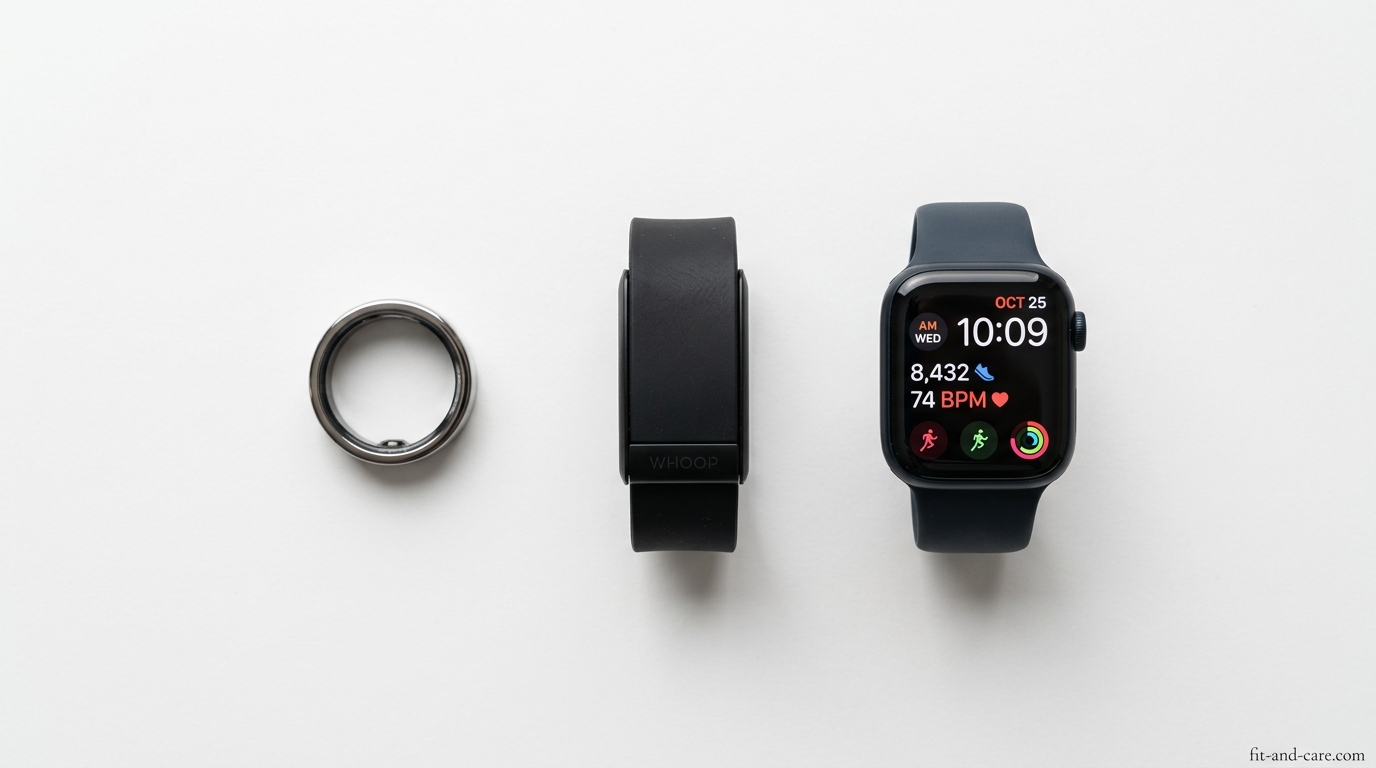
Oura Ring vs WHOOP vs Fitbit: Which Fitness Tracker Is Actually Worth It in 2026?
Written by Hamza Ahmad | Reviewed by Rizwan Aftab Ahmad on June, 2026
You’ve decided you want a fitness tracker. Smart move. But now you’re staring at three very different devices—the Oura Ring, the WHOOP, and the Fitbit—and you have absolutely no idea which one is right for you.
Don’t worry. We’ve broken it all down in plain English—no jargon, no bias, no brand sponsorships. By the end of this guide, you’ll know exactly which tracker fits your lifestyle, your goals, and your budget.
And here’s something important to know before we dive in: according to the American College of Sports Medicine (ACSM), wearable technology is the #1 fitness trend of 2026—with nearly half of all adults now owning a fitness tracker or smartwatch. The real question is no longer whether to get one. Which one is it?
Quick Comparison: Oura Ring vs WHOOP vs Fitbit at a Glance
| Feature | Oura Ring Gen 3 | WHOOP 4.0 | Fitbit Charge 6 |
|---|---|---|---|
| Form Factor | Ring | Wristband | Wristband |
| Display | None | None | Yes (touchscreen) |
| Price | $299 + $5.99/mo | $239 + $30/mo | $159 (no subscription) |
| Battery Life | 4–7 days | 4–5 days | 7 days |
| Sleep Tracking | ⭐⭐⭐⭐⭐ Best-in-class | ⭐⭐⭐⭐⭐ Excellent | ⭐⭐⭐⭐ Good |
| HRV Tracking | ⭐⭐⭐⭐⭐ | ⭐⭐⭐⭐⭐ | ⭐⭐⭐ |
| GPS | No | No | Yes (built-in) |
| Best For | Sleep & recovery | Athletes & training | Everyday fitness |
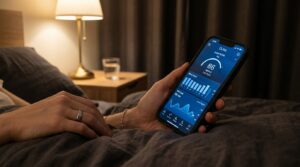
1. Oura Ring Gen 3 — The Sleep and Recovery King
The Oura Ring is unlike anything else on this list. It’s a ring—not a wristband—which means it sits on your finger 24/7 without feeling like a gadget. From the outside, it looks like a piece of jewelry. On the inside, it’s one of the most sophisticated health sensors you can wear.
What the Oura Ring Does Best
The Oura Ring is widely regarded as the gold standard for sleep tracking. It measures your sleep stages (light, deep, and REM), tracks your resting heart rate throughout the night, and monitors your heart rate variability (HRV)—one of the most accurate indicators of how well your body has recovered.
Every morning, it gives you three scores:
- Readiness Score — How recovered and ready your body is for the day
- Sleep Score — How restful and restorative your sleep was
- Activity Score — How active you’ve been relative to your goals
These scores are surprisingly accurate and actionable. If your readiness is low, the app will literally tell you to take it easy that day. If your HRV has been dropping, it’s a sign your body is under stress — and the Oura Ring catches it before you feel it.
Speaking of body signals, if you’re also tracking things like dehydration or energy levels during your day, read our guide on 6 Signs of Dehydration You Shouldn’t Ignore — these often show up in your Oura data as well.
Oura Ring Limitations
- No screen — you need your phone to see data
- No built-in GPS
- Monthly subscription required ($5.99/month) after free trial
- Doesn’t track specific workout types automatically
Who Should Buy the Oura Ring?
The Oura Ring is perfect for people who prioritize sleep quality and recovery over gym-specific metrics. If you work a high-stress job, travel frequently, or simply want to understand your body on a deeper level, this is your device.
2. WHOOP 4.0 — The Athlete’s Weapon
WHOOP is the most intense, data-obsessed fitness tracker on this list — and it’s proud of that fact. It has no screen, no step counter, and no calorie display. Its entire philosophy is built around one question: How hard should you push today?
What WHOOP Does Best
WHOOP tracks your strain (how hard you worked) and your recovery (how well you bounced back) in a continuous loop. Every morning, you get a Recovery Score from 0–100%. Green means go hard. Yellow means moderate. Red means rest.
Its HRV tracking is among the most detailed available in a consumer wearable, and it updates in real time throughout workouts. Serious athletes—runners, cyclists, and CrossFitters—love WHOOP because it tells them not just what they did but whether their body is ready for more.
WHOOP also tracks respiratory rate, skin temperature, and blood oxygen — all passively, all day. The WHOOP 4.0 features also include a discreet wrist or bicep band option, meaning it works for people who want to track while swimming or during contact sports.
If you’re pushing hard in the gym, don’t forget recovery is half the battle. Check out our guide on Body Care Tips After Workout to pair with your WHOOP data for maximum results.
WHOOP Limitations
- Most expensive ongoing cost — $30/month subscription
- No display at all — 100% app-dependent
- No GPS
- Overkill for casual users
Who Should Buy WHOOP?
WHOOP is built for performance-focused individuals — people who train regularly and want to optimize every session. If you’re training for a race, doing high-intensity workouts multiple times a week, or just obsessed with your data, WHOOP is your device.
3. Fitbit Charge 6 — The Everyday Champion
Fitbit has been in the fitness tracker game longer than any brand on this list. The Charge 6 is their flagship wristband in 2026 — and it’s a genuinely great device for the vast majority of people who just want to be healthier without becoming data scientists.
What Fitbit Does Best
The Fitbit Charge 6 is the only device on this list with a proper touchscreen display. You can see your stats — steps, heart rate, calories, notifications — right on your wrist without reaching for your phone. It also has built-in GPS, which neither the Oura Ring nor WHOOP offers.
Fitbit’s app is the most beginner-friendly of the three. The interface is clean, motivating, and easy to understand. It connects with Google Maps, YouTube Music, and Google Wallet — useful perks that the others can’t match.
The Active Zone Minutes feature automatically detects when your heart rate enters fat-burning or cardio zones during any activity—walking, cycling, or dancing—and counts those minutes toward your weekly goal. This makes it incredibly easy to track meaningful exercise without logging workouts manually.
If you’re a beginner just getting started with fitness, pair your Fitbit journey with our Fitness for Beginners: Workout Plans guide to make the most of your data.
Also, if you’re tracking calories alongside your Fitbit, our Macro & Calorie Planner is the perfect companion tool to sync your nutrition goals with your activity levels.
Fitbit Limitations
- Sleep tracking is good, but not as detailed as Oura or WHOOP
- HRV data is basic compared to the other two
- No subscription needed—but premium Fitbit features cost $10/month
- Less popular in serious athletic communities
Who Should Buy Fitbit?
Fitbit is perfect for everyday users — people who want to move more, sleep better, and stay on top of their general health without committing to a hardcore fitness lifestyle. It’s also the best option if you’re on a budget and hate subscriptions.
Sleep Tracking Compared: Which One Wins?
Sleep tracking is one of the most important features in any wearable, and there’s a clear hierarchy here.
Oura Ring wins for sleep. Its placement on the finger gives it access to stronger arterial blood flow signals, making its sleep stage detection and HRV readings more accurate than wrist-based devices. If better sleep is your #1 goal, Oura is the answer.
WHOOP is a close second, especially for athletes who need to know if they’ve truly recovered. Fitbit is solid for casual tracking but lacks the granular detail that the others provide.
Want to improve the quality of sleep your tracker reports? Start with the basics—our post on the Benefits of Water for Health and Skin explains how hydration directly impacts your overnight recovery data.
Heart Rate Variability (HRV): Why It Matters More Than Steps
Most people still judge fitness trackers by step counts. But in 2026, the real metric that matters is heart rate variability (HRV).
HRV measures the tiny variation in time between each heartbeat. A higher, more variable HRV generally indicates that your body is well-rested, low-stress, and ready to perform. A declining HRV can signal fatigue, illness, or overtraining—often days before you consciously feel it.
Both Oura and WHOOP excel at HRV tracking. Fitbit measures it, but in a more simplified way. If HRV is important to your training or well-being, go with Oura or WHOOP.
According to research published in the National Library of Medicine, HRV is one of the most reliable non-invasive markers of autonomic nervous system health, validating why serious health trackers have made it central to their platforms.
Price Breakdown: True Cost Over 12 Months
| Tracker | Device Cost | Subscription/Year | Total Year 1 |
|---|---|---|---|
| Oura Ring Gen 3 | $299 | $71.88 | ~$371 |
| WHOOP 4.0 | $239 | $360 | ~$599 |
| Fitbit Charge 6 | $159 | $0 (basic free) | ~$159 |
WHOOP’s subscription model makes it by far the most expensive over time. If budget matters, Fitbit wins hands down. If you’re investing in serious health optimization, the Oura Ring offers the best value for its subscription cost.
Which Fitness Tracker Is Right for You? (Decision Guide)
Still not sure? Use this simple guide:
- ✅ You want the best sleep tracking available → Oura Ring
- ✅ You train hard and want to optimize performance → WHOOP
- ✅ You want everyday fitness tracking with a screen and GPS → Fitbit Charge 6
- ✅ You’re on a budget and hate subscriptions → Fitbit Charge 6
- ✅ You want the most discreet, jewellery-style tracker → Oura Ring
- ✅ You’re a serious athlete who wants strain + recovery balance → WHOOP
Final Verdict
There’s no single “best” fitness tracker—only the best one for you.
The Oura Ring is the most elegant, science-backed option for anyone who wants to deeply understand their sleep and recovery. The WHOOP is the ultimate tool for performance-driven athletes who live and breathe their training data. And the Fitbit Charge 6 is the most practical, accessible, and beginner-friendly tracker for the vast majority of people.
Whatever you choose, the act of tracking itself is powerful. Awareness drives change. And when you pair your tracker data with solid fitness habits—like the ones in our Beginner Workout Plans or by monitoring your calorie goals with our BMI Calculator—you’ll start seeing real results faster than you expected.
The best fitness tracker is the one you actually wear every day. Pick the one that fits your life—and start paying attention.
Frequently Asked Questions
Is Oura Ring better than WHOOP for sleep tracking?
Yes, most independent tests show the Oura Ring edges out WHOOP for sleep stage accuracy, primarily due to its finger placement giving it stronger blood flow signals. Both are excellent, but Oura is the sleep specialist.
Does WHOOP work without a subscription?
No. WHOOP requires an active membership ($30/month) to function. Without a subscription, the device cannot sync or display data.
Is Fitbit good enough in 2026?
Absolutely. For everyday health tracking, step goals, workout detection, and general sleep monitoring, the Fitbit Charge 6 is more than capable—and the only one with a screen and built-in GPS.
Which fitness tracker has the best battery life?
The Fitbit Charge 6 lasts for up to 7 days. Oura Ring offers 4–7 days. WHOOP comes in at 4–5 days.
Can I wear an Oura Ring to the gym?
Yes, the Oura Ring is water-resistant and durable enough for most gym activities. However, it does not automatically detect gym exercises the way a wristband tracker might.

Hamza Ahmad is a dedicated fitness and health researcher and the founder of Fit and Care. He specializes in translating evidence-based health science into practical, accessible guidance on nutrition, fitness, and wellness.