
Best Smartwatches for Blood Sugar & Blood Pressure Tracking (2026 Guide)

Why Everyone’s Talking About Health-Tracking Smartwatches in 2026
Smartwatches used to count steps. Now they’re trying to do a lot more — and for good reason. Wearable technology has become the single biggest trend in fitness tech this year, with devices increasingly able to monitor vital signs like blood pressure and blood glucose trends right from your wrist.
If you’re managing prediabetes, keeping an eye on hypertension, or simply want a fuller picture of your metabolic health alongside your workouts, this shift matters. But it also raises a fair question: how accurate are these readings, really, and who should actually rely on them?
This guide breaks down the best health-tracking smartwatches available right now, what their blood sugar and blood pressure features can (and can’t) do, and how to fold that data into a broader wellness routine—including your daily calorie and macro targets.
What “Blood Sugar Tracking” on a Smartwatch Actually Means
This is the part most product pages gloss over, so let’s be direct about it.
There are two very different categories of “blood sugar tracking” smartwatches on the market:
- CGM-paired watches: These don’t measure glucose themselves. They pull data from a separate continuous glucose monitor (CGM) patch—like Dexcom or Abbott Libre—worn on your arm and simply display the trend on your wrist.
- Non-invasive optical sensor watches: These attempt to estimate glucose trends using light-based sensors, similar to how they measure heart rate. This technology is newer, less standardized, and not yet considered a substitute for a clinically validated glucose meter.
Neither type is currently approved by the FDA as a primary diagnostic tool for diabetes management in the United States. If you have diabetes or prediabetes, these watches are best used as a convenience layer on top of — not a replacement for — the monitoring method your doctor has recommended.
Top 5 Health-Tracking Smartwatches Compared
Here’s how the current leaders stack up on the features that matter most for metabolic and cardiovascular tracking.
| Watch | Price | Battery | Glucose Feature | BP Monitoring |
| Apple Watch Series 11 [GPS + Cellular, 46mm] | $399.00 | 1 milliampere-hour | CGM display pairing | Cuffless estimate |
| Samsung Galaxy Watch 8 | 44mm | $249.00 | 325 milliampere-hours | CGM display pairing | Cuffless estimate |
| Garmin fēnix® 8 – 47mm, AMOLED, Premium | $749.00 | 300 milliampere-hours | CGM display pairing | Cuffless estimate |
| Google Pixel Watch 4 (41mm) – Android | $449.00 | 325 hours | CGM display pairing | Cuffless estimate |
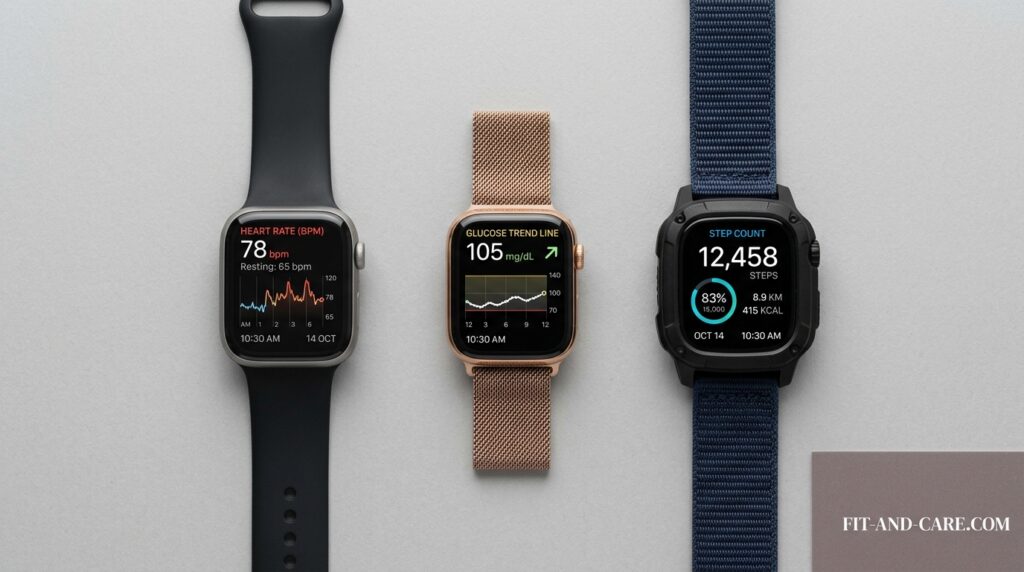
How to Choose the Right One for You
If you’re managing prediabetes or diabetes
Prioritize a watch that pairs with your existing CGM rather than one promising standalone glucose readings. Accuracy and continuity of your established monitoring method matter more than convenience here.
If you’re focused on general metabolic wellness
An optical trend-estimate watch can be a useful motivational tool—for example, noticing how a high-carb lunch affects your energy levels—without needing clinical-grade precision.
If blood pressure is your main concern
Look for watches with cuff-calibration features, where you periodically validate the watch’s readings against a standard blood pressure cuff. Uncalibrated cuffless estimates tend to drift over time.
Pairing Your Smartwatch Data With Your Calorie and Macro Targets
Tracking heart rate, glucose trends, or blood pressure is only half the picture. The other half is knowing your baseline calorie and macro needs so you can actually interpret what your watch is telling you.
If a glucose spike shows up after a particular meal, for example, it’s far more useful when you already know your daily carbohydrate target. That’s where pairing wearable data with a TDEE calculation comes in.
Use our free BMI & TDEE calculator to find your personal calorie and macro targets, then cross-reference them against what your smartwatch shows you day to day.
Who Should (and Shouldn’t) Rely on Wearable Health Data
- Good fit: People without diagnosed conditions who want general trend awareness for motivation and lifestyle adjustments.
- Use with caution: People with prediabetes or borderline hypertension—useful as a supplementary signal, not a diagnostic one.
- Not a substitute: People with diagnosed diabetes or hypertension who are on medication. Dosing and treatment decisions should never be based on smartwatch readings alone.
Frequently Asked Questions
Can a smartwatch really measure blood sugar without pricking your finger?
Some watches offer non-invasive optical estimates, but as of 2026, none have FDA clearance as a standalone glucose-measuring medical device in the U.S. Watches that show CGM data are displaying readings from a separate sensor patch, not measuring glucose themselves.
Are these smartwatches FDA approved for medical use?
Most fitness smartwatches are sold as wellness devices, not medical devices. A handful of specific ECG or blood oxygen features have received FDA clearance, but glucose and blood pressure features are largely classified as general wellness, not diagnostic, tools. Check the specific regulatory status of any model before relying on it.
What’s the best smartwatch for someone who’s prediabetic?
Look for a model that pairs cleanly with a CGM if you’re already using one and has reliable heart rate and activity tracking, and — most importantly — discuss any wearable-based monitoring plan with your doctor first.
Do these watches replace a home blood pressure cuff?
No. Even cuffless watches with calibration features are best used alongside, not instead of, a validated blood pressure cuff, especially if you’re monitoring hypertension.
The Bottom Line
Health-tracking smartwatches in 2026 are genuinely more capable than they were even two years ago, but they’re tools for awareness, not diagnosis. Pick a watch that matches your actual health goals, pair the data with a solid understanding of your calorie and macro needs, and loop in your doctor for anything that touches medication or diagnosed conditions.

Hamza Ahmad is a dedicated fitness and health researcher and the founder of Fit and Care. He specializes in translating evidence-based health science into practical, accessible guidance on nutrition, fitness, and wellness.



Great content! Keep up the good work!