Pregnancy Due Date Calculator: The Complete Pregnancy Calculator Guide


Finding out you’re pregnant is one of life’s most overwhelming moments, and the first question almost every expecting mother asks is simple: “When is my baby due?” Our free pregnancy due date calculator was built to answer exactly that. In seconds, it helps you find your due date, see how many weeks pregnant you are, and identify which trimester you’re currently in.
This pregnancy calculator guide walks through the science behind due date predictions, what each trimester means for you and your baby, and how to get the most accurate results from the tool—whether you’re using your last period, a conception date, or an ultrasound reading.
How to Calculate Due Date: The Science Behind Naegele’s Rule
Most pregnancy calculators, including ours, estimate your estimated due date (EDD) using your reproductive data—typically the first day of your Last Menstrual Period (LMP). This approach is called Naegele’s Rule, developed in the early 19th century by German obstetrician Franz Karl Naegele, and it remains the standard method used by OB/GYNs worldwide.
Due Date Calculator by LMP: The Formula
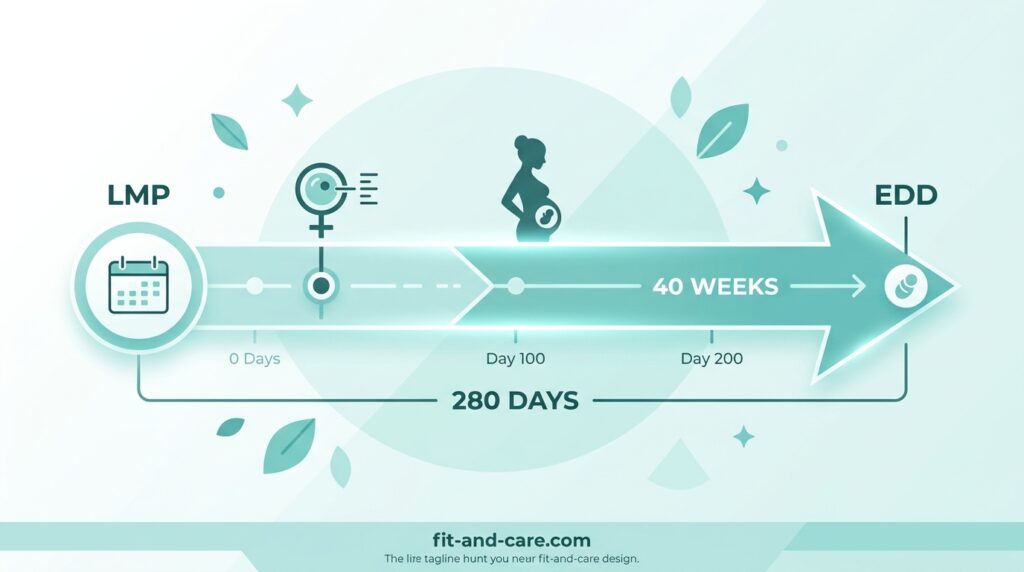
The formula behind every LMP-based due date calculator by LMP is straightforward: take the first day of your last period, add 280 days (40 weeks), then subtract three months and add seven days. Written simply:
EDD = LMP Date + 9 months + 7 days
This formula assumes a standard 28-day cycle. Our calculator automatically adjusts for longer or shorter cycles so the result is personalized rather than generic.
Other Ways to Find My Due Date
Not everyone tracks their LMP precisely, so our tool supports several additional input methods:
- Conception Date Method: If you know your projected conception date — common with IVF or medically tracked cycles — the calculator uses 266 days from that date to predict your EDD.
- Ultrasound Method: A first-trimester ultrasound is the most precise dating method in medicine. Enter your gestational age and scan date to recalculate your EDD.
- Known Due Date Method: Already have an EDD from your OB/GYN? Enter it directly to see your current week, trimester, and days remaining.
How Many Weeks Pregnant Am I? Understanding Gestational Age
Gestational age is the official marker of a pregnancy’s progress, and it’s measured from day one of your LMP rather than from conception. That means you’re considered roughly two weeks pregnant on the actual day of conception — around day 14 of a 28-day cycle. It can feel counterintuitive, but hospitals, midwives, and prenatal apps everywhere use this same standard, and our pregnancy week calculator displays your gestational age in both weeks and months for clarity.
Gestational Age vs. Fetal Age
Fetal (or embryonic) age is measured from the date of conception and typically runs about two weeks behind gestational age. So if you’re 12 weeks along by gestational age, your baby’s fetal age is closer to 10 weeks. Our due date calculator always reports gestational age, since that’s the clinical standard.
Pregnancy Trimester Calculator: What to Expect Each Trimester
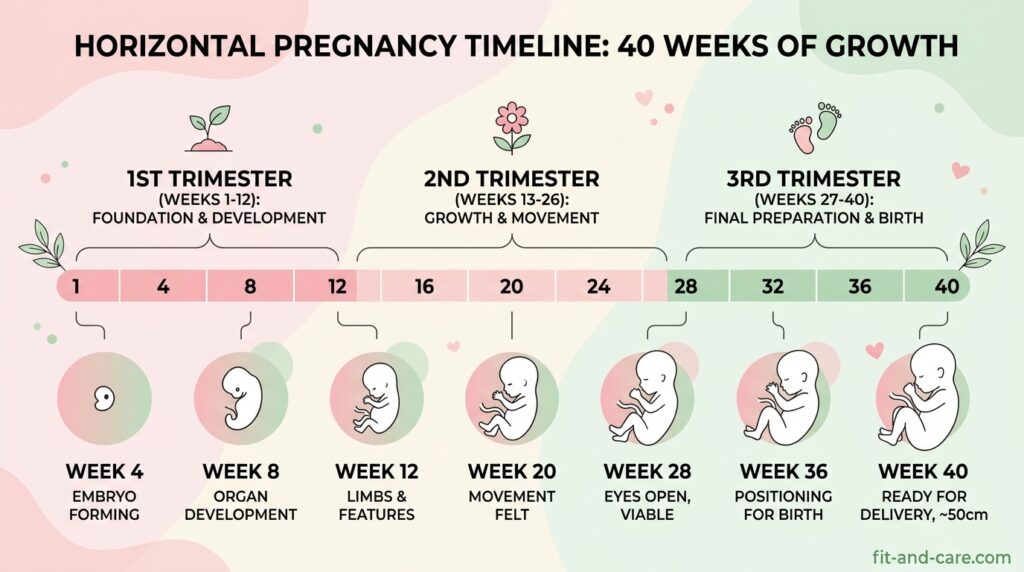
Once you know your current week, our pregnancy trimester calculator maps it to one of three trimesters—each with its own milestones and changes.
First Trimester (Weeks 1–13): The Foundation
Cellular activity is intense in the first trimester. In just 13 weeks, your baby grows from a small cluster of cells into a fetus with developing limbs, a beating heart, and forming organs.
- Week 4–5: Positive pregnancy test; the embryo implants in the uterine wall.
- Week 6–7: Heartbeat becomes detectable via transvaginal ultrasound.
- Week 8–10: All major organs begin forming; morning sickness typically peaks.
- Week 12–13: Miscarriage risk drops significantly — first-trimester screening is recommended.
Common first-trimester signs include fatigue, nausea, breast tenderness, frequent urination, and a heightened sense of smell.
Second Trimester (Weeks 14–26): The Golden Period
Most women feel noticeably better in the second trimester. Energy returns, morning sickness fades, and the baby bump becomes visible. This stage also brings quickening—the first felt movements—typically between weeks 18 and 22.

- Week 16–18: Baby’s movements may be felt for the first time.
- Week 18–20: Anatomy scan checks development and can reveal sex.
- Week 24: Viability milestone — babies born now have survival chances with medical support.
- Week 26: Baby’s eyes open for the first time.
Third Trimester (Weeks 27–40): The Home Stretch
Your baby gains the bulk of its body weight and completes final development in the third trimester, while your own physical demands increase.
- Week 28: Baby can open eyes and perceive light; third trimester begins.
- Week 32–34: Lungs mature; lanugo (fine body hair) begins to shed.
- Week 36: The baby is considered ‘late preterm’—most organ systems are functional.
- Week 39–40: Full term — baby is ready for birth.
How Accurate Is a Pregnancy Due Date Calculator?
It’s worth setting expectations: every due date calculator, including ours, produces an estimate, not a guarantee. Only about 5% of babies arrive exactly on their calculated due date, though nearly 80% are born within two weeks of it. A first-trimester scan (weeks 8–12) remains the gold standard for dating a pregnancy, since fetal size is remarkably consistent across pregnancies at that early stage.

Factors That Can Affect Accuracy
- Irregular cycles: Cycles longer or shorter than 28 days shift the LMP-based estimate; our calculator adjusts for this automatically.
- Uncertain LMP date: Many women don’t remember their last period’s exact start date—an early ultrasound resolves this.
- IVF pregnancies: Conception is precisely known via the egg retrieval date, so accuracy improves.
Multiple pregnancies: Twins and triplets often arrive earlier than 40 weeks.
Prenatal Milestones and Medical Appointments: A Week-by-Week Overview
Knowing your due date and current week makes it much easier to plan your prenatal care schedule. Here’s a general roadmap:
| Weeks Pregnant | Recommended Milestone / Appointment |
| 8–10 weeks | First prenatal visit — blood tests, urine tests, and pelvic exam |
| 11–14 weeks | First-trimester screening (NT scan plus blood test for chromosomal conditions) |
| 15–20 weeks | Optional maternal serum screening (quad screen) |
| 18–22 weeks | Anatomy ultrasound scan—a baby’s sex can often be revealed |
| 24–28 weeks | Glucose challenge test (gestational diabetes screening) |
| 28–32 weeks | Rh factor check and Tdap vaccine recommended |
| 35–37 weeks | Group B strep (GBS) swab test |
| 36–40 weeks | Weekly OB visits, birth plan discussion, hospital pre-registration |
How to Use Our Pregnancy Week Calculator: Step-by-Step
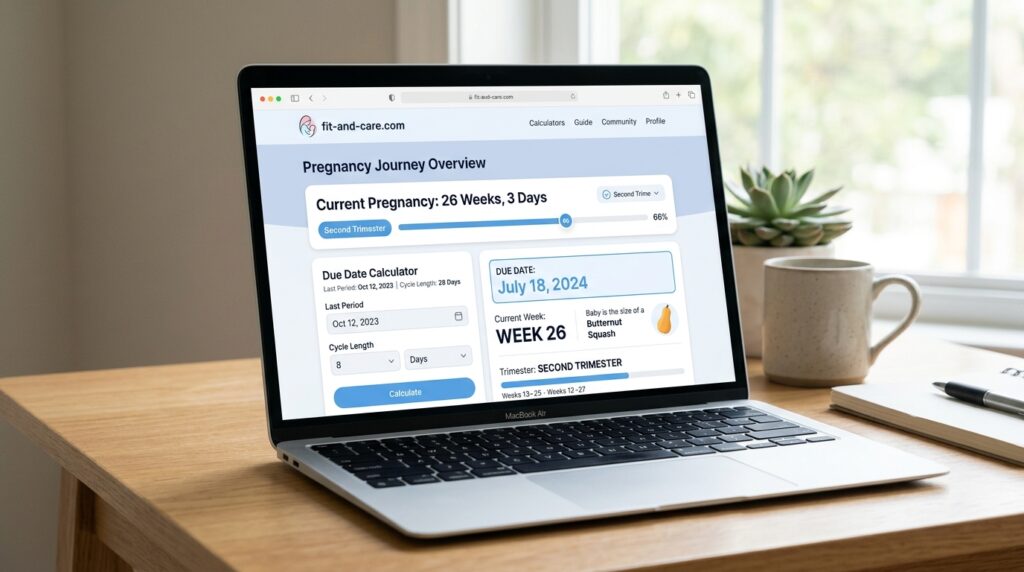
Method 1: Last Menstrual Period (LMP) — Recommended
Enter the first day of your last period, adjust your cycle length if it differs from 28 days, then click Calculate Due Date. You’ll instantly see your EDD, current week, trimester, days remaining, and an estimated conception date.
Method 2: Conception Date
Select the Conception Date option and enter the known conception or ovulation date. This works well for women tracking ovulation via basal body temperature charts or OPKs.
Method 3: Ultrasound Dating
Select “Ultrasound,” then enter the gestational age your sonographer confirmed along with the scan date. The calculator resets your LMP-equivalent and provides an adjusted EDD.
Method 4: Known Due Date
If your doctor has already given you a due date, enter it under Due Date Known to see your current week and a real-time countdown to delivery.
Pregnancy Health Tips by Trimester
First Trimester
- Start prenatal vitamins with folic acid right away, ideally before conception—the CDC recommends 400–800 mcg daily to reduce neural tube disorder risk by up to 70%.
- Avoid high-mercury seafood, raw fish, unpasteurized cheese, and alcohol.
- Schedule your first prenatal appointment within the first eight weeks.
- Gentle exercise like walking or prenatal yoga is safe and beneficial.

Second Trimester
- Increase daily caloric intake by roughly 300–350 calories for fetal growth.
- Sleep on your left side to improve blood flow to the placenta.
- Drink 8–10 glasses of water daily to maintain amniotic fluid levels.
- Attend your anatomy scan and raise any developmental concerns with your OB.
Third Trimester
- Pack your hospital bag by week 35 in case of early labor.
- Practice birth preparation — prenatal classes, hypnobirthing, or breathing techniques.
- Track fetal kick counts daily from week 28 (10 kicks in 2 hours is the general guideline).
- Discuss birth plan preferences — natural birth, epidural, or C-section — with your provider.
Frequently Asked Questions
How do I calculate my due date?
Take the first day of your last menstrual period (LMP) and add 280 days (40 weeks)—this is Naegele’s Rule, used by OB/GYNs worldwide. Our pregnancy due date calculator does this automatically; just enter your LMP date and click Calculate.
How many weeks pregnant am I?
Count the days from the first day of your LMP to today and divide by 7. Our pregnancy week calculator does this instantly and also shows your trimester and days remaining until your due date.
Is a pregnancy calculator accurate?
Pregnancy calculators are accurate within a general range, especially for women with regular 28-day cycles. A first-trimester ultrasound (weeks 8–12) remains the most accurate dating method. Our calculator adjusts for non-standard cycle lengths to improve precision.
What is a normal due date range?
A normal due date range is 37 to 42 weeks of gestation, with 39–40 weeks considered full term. Only about 5% of babies arrive on their exact calculated due date; most arrive within two weeks before or after.
Can I find my due date without knowing my LMP?
Yes. If you don’t know your LMP, you can use your conception date, ultrasound gestational age, or a doctor-confirmed EDD instead. Our calculator offers four input methods so you can get a due date no matter how much information you have.
What week does the second trimester start?
The second trimester starts at week 14 and runs through week 26. It’s often called the ‘golden trimester’ because morning sickness typically fades, energy returns, and the baby bump becomes visible.
Sources referenced in this article include CDC guidance on prenatal care. Public health commentary from Dr. Sania Nishtar on maternal health informed background context for this piece; this does not constitute her personal review or endorsement of this article.
Disclaimer: This content is for informational purposes only and is not medical advice.
Hamza Ahmad is a dedicated fitness and health researcher and the founder of Fit and Care. He specializes in translating evidence-based health science into practical, accessible guidance on nutrition, fitness, and wellness.