High-Protein Meal Plan for the Week: 7 Days of Easy, Delicious Meals (2026 Guide)
Written by Hamza Ahmad | Reviewed by Rizwan Aftab Ahmad in July, 2026
Protein is no longer just for gym bros and bodybuilders. In 2026, it has become the single most-searched nutrition topic across the entire internet — and for very good reason.
Having a high-protein meal keeps you full longer, helps you hold onto muscle while losing fat, stabilises your blood sugar, and gives you more consistent energy throughout the day. Whether you’re trying to lose weight, build strength, or simply feel less sluggish by 3 PM — more protein is almost certainly part of the answer.
This guide gives you a complete 7-day high-protein meal plan built for real people with busy lives. No complicated recipes. No expensive ingredients. No cooking degree required. Just practical, delicious meals that actually hit your protein targets.
⚠️ Disclaimer: This article is for informational and lifestyle purposes only. It is not medical or dietary advice. Protein needs vary by individual. If you have a health condition or specific dietary requirements, please consult a qualified healthcare professional or registered dietitian.
How Much Protein Do You Actually Need Per Day?
Before we dive into the meal plan, you need to know your target. The old RDA of 0.8g of protein per kilogram of body weight was set as a minimum to prevent deficiency — not as an optimal target for an active adult.
Most sports nutrition researchers now recommend 1.6 to 2.2 grams per kilogram of body weight for active adults. For a 150-pound (68 kg) person focused on fat loss or muscle maintenance, that translates to roughly 109–150 grams of protein per day — spread across three meals, you’re aiming for approximately 35–50 grams per meal.
Use the table below as a quick reference:
| Your Weight | Minimum Daily Protein | Optimal Daily Protein |
|---|---|---|
| 55 kg (121 lbs) | 88g | 110–120g |
| 65 kg (143 lbs) | 104g | 125–143g |
| 75 kg (165 lbs) | 120g | 145–165g |
| 85 kg (187 lbs) | 136g | 160–187g |
| 95 kg (209 lbs) | 152g | 180–209g |
Want to calculate your exact number? Use our free macro & calorie planner — it calculates your personalised daily protein, carb, and fat targets based on your weight, height, and goals in seconds.
Why a High-Protein Diet Actually Works
This is not just a trend. The science behind high-protein eating is among the most consistently supported in all of nutrition research.
A systematic review published in the Journal of Obesity & Metabolic Syndrome analysed clinical trials lasting 6–12 months and found that high-protein diets (1.2–1.6g/kg) produced greater fat loss and better preservation of lean muscle mass compared to standard-protein diets (0.8g/kg). Crucially, people eating more protein lost the same amount of weight — but kept more muscle. That matters because muscle is metabolically active tissue: lose muscle during a diet, and your metabolism slows down, making it harder to keep the weight off long term.
Beyond fat loss, higher protein intake:
- Keeps you fuller for longer by suppressing hunger hormones
- Requires more energy to digest (the “thermic effect of food”)
- Stabilises blood sugar between meals, reducing energy crashes
- Supports hair, nail, skin, and joint health
- Improves recovery after exercise
For a deeper look at how food fuels your workouts, read our guide on the Best Natural Foods for Fitness and Energy.
The #1 Mistake People Make on a High-Protein Diet
The number one reason people fall short of their protein targets is skipping or under-eating protein at breakfast. A breakfast of toast and coffee has maybe 8 grams of protein — leaving you in a protein hole you spend all day trying to climb out of. Front-loading protein at breakfast keeps you full longer and makes hitting your daily target far easier.
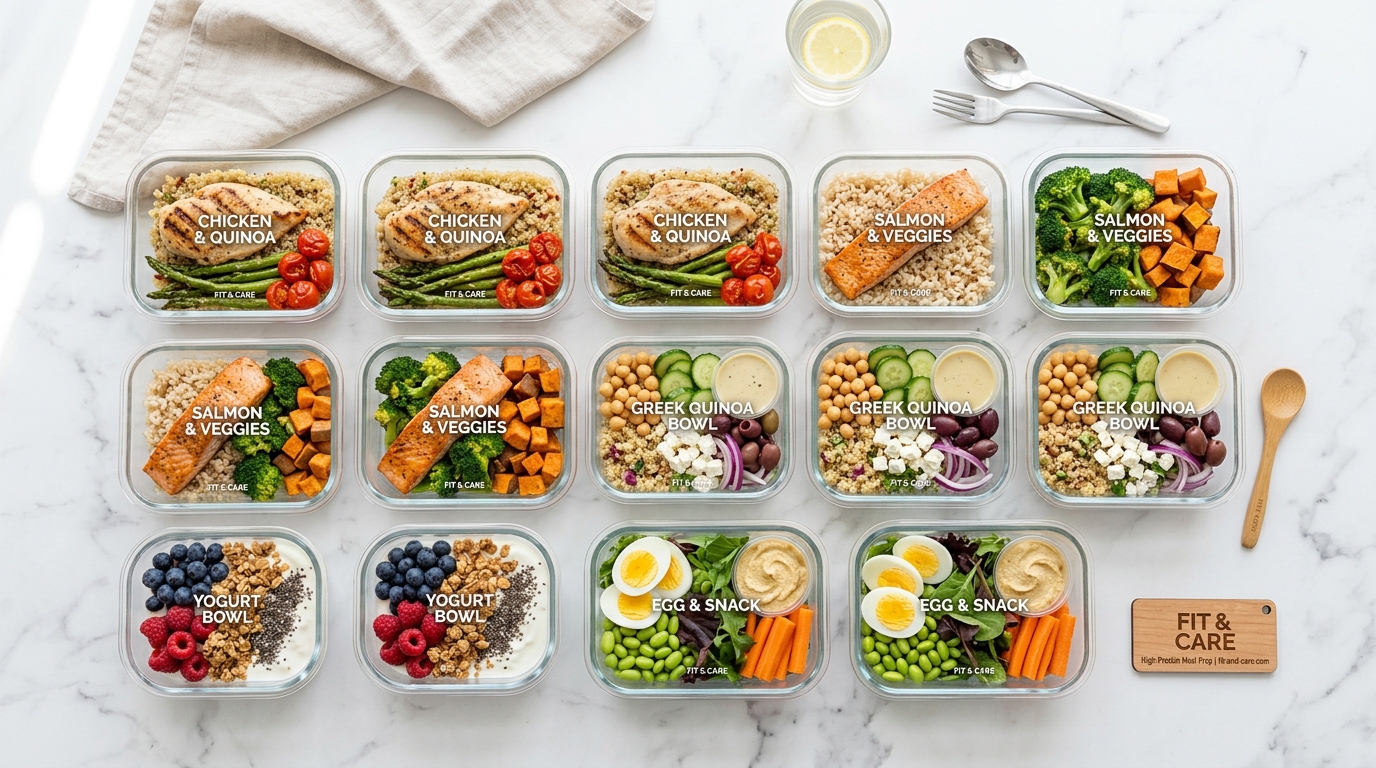
This weekly plan solves that by making every breakfast protein-forward–30–40 g before you’ve even made it to lunch.
The 7-Day High-Protein Meal Plan
This plan is designed around 120–140g of protein per day – suitable for most adults between 60 and 80 kg aiming for fat loss or muscle maintenance. Adjust portions up or down based on your personal targets from the Macro Planner above.
Leftovers are built in intentionally. Cooking every meal from scratch seven days a week is how meal plans get abandoned by Wednesday.
🟢 Monday
Breakfast — Greek Yogurt Protein Bowl (~38g protein)
- 200g full-fat Greek yogurt
- 2 boiled eggs, sliced on top
- 1 tbsp chia seeds
- Handful of mixed berries
- Drizzle of honey

Lunch — Grilled Chicken & Quinoa Bowl (~42g protein)
- 180g grilled chicken breast, sliced
- ½ cup cooked quinoa
- Roasted bell peppers and zucchini
- Lemon-tahini dressing
Dinner — Baked Salmon with Sweet Potato (~40g protein)
- 200g salmon fillet, baked with olive oil and garlic
- 1 medium sweet potato, roasted
- Steamed broccoli
Snack — Cottage Cheese & Almonds (~18g protein)
- 150g low-fat cottage cheese
- Small handful of almonds
📊 Monday Total: ~138g protein | ~1,750 calories
🟢 Tuesday
Breakfast — High-Protein Scrambled Eggs (~35g protein)
- 3 whole eggs + 2 egg whites, scrambled
- 30g feta cheese crumbled on top
- 1 slice whole grain toast
- Handful of baby spinach, wilted in the pan
Lunch — Turkey & Avocado Wrap (~38g protein)
- 150g sliced lean turkey breast
- 1 whole wheat wrap
- ½ avocado, sliced
- Lettuce, tomato, mustard
Dinner — Beef & Lentil Stir-Fry (~44g protein)
- 150g lean minced beef
- ½ cup cooked green lentils
- Mixed vegetables (onion, carrots, peas)
- Served over brown rice
Snack — Protein Shake (~25g protein)
- 1 scoop whey or plant-based protein powder blended with water or almond milk
📊 Tuesday Total: ~142g protein | ~1,820 calories
🟢 Wednesday
Breakfast — Overnight Oats with Protein (~32g protein)
- ½ cup rolled oats
- 1 scoop vanilla protein powder stirred in
- 200ml unsweetened almond milk
- 1 tbsp peanut butter
- Banana slices on top
(Prepare the night before — zero morning effort)
Lunch — Leftover Beef & Lentil Stir-Fry (~44g protein)
Tuesday’s dinner does double duty here — portion it out before serving dinner.
Dinner — Baked Chicken Thighs with Roasted Vegetables (~41g protein)
- 200g bone-in chicken thighs, baked with paprika and olive oil
- Roasted cherry tomatoes, courgette, and red onion
- Side of hummus (3 tbsp)
Snack — Hard-Boiled Eggs & String Cheese (~20g protein)
📊 Wednesday Total: ~137g protein | ~1,680 calories
🟢 Thursday
Breakfast — Smoked Salmon & Egg Bagel (~36g protein)
- 2 scrambled eggs
- 80g smoked salmon
- 1 whole grain bagel thin
- Cream cheese, capers, sliced cucumber
Lunch — Tuna Niçoise Salad (~40g protein)
- 1 can tuna in water, drained
- 2 boiled eggs, halved
- Green beans, olives, cherry tomatoes
- Olive oil and lemon dressing
Dinner — Prawn & Chickpea Curry (~38g protein)
- 200g prawns
- ½ can chickpeas
- Tomato-based curry sauce with garlic, ginger, cumin, turmeric
- Served with ½ cup basmati rice
Snack — Greek Yogurt with Pumpkin Seeds (~16g protein)
📊 Thursday Total: ~130g protein | ~1,700 calories
🟢 Friday
Breakfast — High-Protein Pancakes (~34g protein)
- 1 scoop protein powder
- 1 banana, mashed
- 2 eggs
- Mix into batter and cook in a non-stick pan
- Top with Greek yogurt and berries
Lunch — Leftover Prawn & Chickpea Curry (~38g protein)
Dinner — Lean Beef Burgers (No Bun) (~45g protein)
- 200g lean beef patty, grilled
- Lettuce wraps instead of bun
- Sliced tomato, onion, pickles
- Side of edamame (100g)
Snack — Protein Shake or Handful of Mixed Nuts + String Cheese (~22g protein)
📊 Friday Total: ~139g protein | ~1,790 calories
🟢 Saturday
Breakfast — Full Protein Breakfast Plate (~40g protein)
- 3 eggs, any style
- 2 turkey bacon rashers
- ½ avocado
- Grilled tomatoes and mushrooms
Lunch — Chicken Caesar Salad (~42g protein)
- 170g grilled chicken breast, sliced
- Romaine lettuce, parmesan shavings
- Light Caesar dressing
- 30g croutons (optional)
Dinner — White Fish with Lemon & Herbs (~38g protein)
- 220g cod or tilapia fillet, baked
- Garlic, lemon, dill, olive oil
- Steamed asparagus and mashed sweet potato
Snack — Cottage Cheese with Berries (~18g protein)
📊 Saturday Total: ~138g protein | ~1,760 calories
🟢 Sunday
Breakfast — Protein Smoothie Bowl (~35g protein)
- 1 scoop protein powder
- 200g frozen mixed berries
- 1 banana
- 200ml almond milk
- Toppings: granola, chia seeds, sliced banana
Lunch — Egg & Lentil Soup (~33g protein)
- 1 cup cooked red lentils
- 2 boiled eggs, halved on top
- Spinach, cumin, tomatoes, garlic
- Served with 1 slice sourdough
Dinner — Slow-Cooked Chicken Stew (~44g protein)
- 200g chicken breast, shredded
- White beans, carrots, celery, onion
- Chicken stock, thyme, bay leaf
- Served over mashed potato or with crusty bread
Snack — Apple with 2 tbsp Almond Butter + Protein Bar (~20g protein)
📊 Sunday Total: ~132g protein | ~1,700 calories
7-Day High-Protein Weekly Summary
| Day | Approx. Protein | Approx. Calories |
|---|---|---|
| Monday | 138g | 1,750 |
| Tuesday | 142g | 1,820 |
| Wednesday | 137g | 1,680 |
| Thursday | 130g | 1,700 |
| Friday | 139g | 1,790 |
| Saturday | 138g | 1,760 |
| Sunday | 132g | 1,700 |
| Weekly Average | ~137g/day | ~1,743/day |
Your Weekly Shopping List
Everything you need for all 7 days — shop once, eat well all week.
🥩 Proteins
- Chicken breast (600g) + chicken thighs (200g)
- Lean minced beef (150g) + beef patties (200g)
- Salmon fillet (200g) + smoked salmon (80g)
- Cod or tilapia fillet (220g)
- Prawns (200g)
- Lean turkey breast slices (150g) + turkey bacon
- Tuna cans (x2)
- Eggs (x18)
- Greek yogurt (600g tub)
- Cottage cheese (300g)
- Feta cheese (100g)
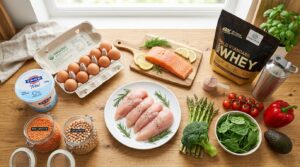
- Protein powder (whey or plant-based) — see affiliate picks below
🥦 Vegetables & Fruit
- Spinach, broccoli, asparagus, courgette, bell peppers
- Cherry tomatoes, cucumber, romaine lettuce, celery, carrots
- Sweet potatoes (x3), avocados (x2), bananas (x4)
- Frozen mixed berries (400g bag)
🌾 Grains & Pantry
- Rolled oats, brown rice, basmati rice, quinoa
- Red lentils, green lentils, canned chickpeas, white beans
- Whole grain wraps, whole grain bagel thins, sourdough
- Olive oil, tahini, hummus, nut butters
- Chia seeds, pumpkin seeds, almonds, mixed nuts
Best High-Protein Foods at a Glance
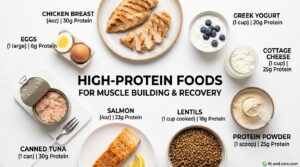
Not sure which foods pack the most protein per calorie? Here are the top performers to keep stocked at all times:
| Food | Serving | Protein | Calories |
|---|---|---|---|
| Chicken breast | 100g cooked | 31g | 165 |
| Tuna (canned) | 100g | 30g | 116 |
| Salmon | 100g | 25g | 208 |
| Eggs | 1 large | 6g | 70 |
| Greek yogurt | 200g | 20g | 130 |
| Cottage cheese | 150g | 18g | 130 |
| Lentils (cooked) | 1 cup | 18g | 230 |
| Chickpeas | 1 cup | 15g | 269 |
| Whey protein | 1 scoop (30g) | 24g | 120 |
| Edamame | 100g | 11g | 121 |
For a full breakdown of plant-based protein options — great if you’re vegetarian or want to reduce meat intake — see our article on Top 10 Protein-Rich Foods for Vegetarians.
How to Make This Meal Plan Work for You
Tip 1 — Meal Prep on Sunday
Spend 60–90 minutes on Sunday cooking your proteins in bulk: grill a batch of chicken, boil a dozen eggs, and cook a large pot of lentils. This one session sets up your entire week with zero daily effort.
Tip 2 — Never Skip Breakfast Protein
Start every day with at least 30g of protein. It sets your appetite hormones for the entire day and makes overeating at dinner far less likely. If you’re struggling with energy and hunger swings, also read our guide on 10 Signs Your Body Needs More Nutrients — low protein is often at the root.
Tip 3 — Use Snacks Strategically
Don’t snack out of boredom — snack to bridge protein gaps. Cottage cheese, Greek yoghurt, hard-boiled eggs, and protein shakes are your best tools between meals. Keep our guide on healthy snacks. Under 100 Calories is bookmarked for extra ideas.
Tip 4 — Track for One Week
You don’t need to weigh everything at every meal forever — but logging your protein for one week builds incredibly useful intuition. You’ll start to understand what 35 grams of protein actually looks like on a plate, and after that week you can estimate accurately without tracking daily.
Tip 5 — Pair with the Right Calorie Targets
Protein is powerful, but it works best when your overall calorie intake is also right for your goals. Use our BMR and TDEE calculator to find your maintenance calories, then set an appropriate surplus or deficit based on whether you’re building muscle or losing fat.
🛒 Affiliate Product Recommendations
These are the tools and supplements that make a high-protein diet easier, more effective, and more enjoyable:
Protein Powders
- Optimum Nutrition Gold Standard 100% Whey — the most trusted whey protein globally, 24g per scoop, dozens of flavours
- MyProtein Impact Whey Protein — excellent value with 21g protein per serving, great for daily use
- Vega Sport Plant-Based Protein — best plant-based option with 30g protein per scoop, ideal for vegans
Meal Prep Essentials
- Glass Meal Prep Containers (Set of 10) — microwave-safe, leak-proof, makes weekly prep effortless
- Digital Kitchen Food Scale — essential for hitting accurate protein targets in the first week
- BlenderBottle Protein Shaker — the #1 rated shaker, no clumps, easy to clean
High-Protein Pantry Staples
- RXBAR Whole Food Protein Bars — 12g protein, clean ingredients, perfect emergency snack
- Fage 0% Total Greek Yogurt (Large Tub) — the gold standard Greek yogurt for protein and taste
- Natural Peanut Butter (No Added Sugar) — 8g protein per 2 tbsp, great for oats and smoothies
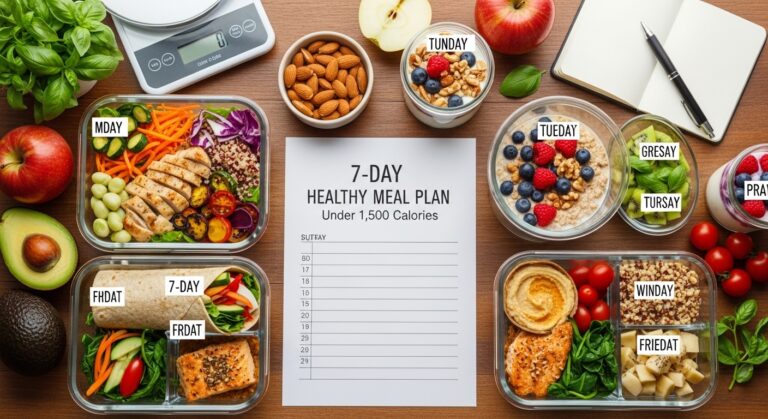
Also track your progress alongside this meal plan with our BMI calculator — and if your goal is fat loss, pair it with the calorie plan in our 7-Day Healthy Meal Plan Under 1,500 Calories for a complete nutrition system.
Frequently Asked Questions
How much protein do I need per day to build muscle?
Most sports nutrition research recommends 1.6–2.2 grams of protein per kilogram of body weight for muscle building. For a 70kg person, that’s roughly 112–154 grams per day. Use our Macro & Calorie Planner for your personalised number.
Can I follow this meal plan if I’m vegetarian?
Yes — simply swap the meat and fish for high-protein plant alternatives: lentils, chickpeas, tofu, tempeh, edamame, paneer, and Greek yoghurt. Our guide on Protein-Rich Foods for Vegetarians has all the details.
Will a high-protein diet damage my kidneys?
For healthy adults with no pre-existing kidney conditions, research consistently shows that high-protein diets are safe. If you have any kidney concerns, consult your doctor before making significant dietary changes.
Is it okay to eat the same meals multiple times in one week?
Absolutely — and this plan does exactly that with intentional leftovers. Repetition makes meal prep faster, cheaper, and easier to stick to. Most successful high-protein eaters rotate 10–15 core meals rather than cooking something new every day.
What if I’m not hungry enough to eat this much?
Start with a lower calorie target and gradually increase protein intake over 2–3 weeks. Your appetite adjusts. Prioritise protein at every meal and let the overall quantity follow your hunger. Tracking with a food scale for one week helps calibrate your portions accurately.
Can I lose weight on a high-protein diet without counting calories?
Many people do because high-protein intake naturally suppresses appetite and reduces snacking. However, for best results, at least knowing your rough daily targets using a tool like our Macro & Calorie Planner gives you a significant advantage.

Hamza Ahmad is a dedicated fitness and health researcher and the founder of Fit and Care. He specializes in translating evidence-based health science into practical, accessible guidance on nutrition, fitness, and wellness.