
Biological Age Calculator — Estimate Your True Body Age (Free Tool)

This free biological age calculator estimates how well your body may be functioning compared to your actual age — based on your sleep, activity, diet, stress, and other everyday habits.
⚠️ Important Medical Disclaimer
This article and calculator are for informational and educational purposes only and do not constitute medical advice. This tool provides a lifestyle-based estimate only and is not a substitute for clinical biological age tests (such as epigenetic/DNA methylation testing, blood biomarker panels, or a physician’s assessment). Always consult a qualified healthcare provider for personalised guidance.
Your birth certificate only tells part of the story. Biological age reflects how well your body is actually functioning — based on habits like sleep, movement, diet, and stress — rather than simply how many years you’ve been alive. Two 40-year-olds can have very different biological ages depending on how they’ve been treating their bodies.
Answer the questions below to get your estimated biological age in seconds, plus a clear verdict on whether your habits are keeping you younger than, on track with, or older than your actual age.
Table of Contents
Biological Age Calculator
A quick, lifestyle-based estimate of how your body may be aging compared to your actual age.
What Is Biological Age?
Biological age (sometimes called functional or physiological age) is an estimate of how well your body is working compared to the average person of your chronological age. Chronological age is simply the number of years since you were born; biological age reflects the cumulative effect of your habits, environment, and genetics on your body’s systems.
This is why a biological age calculator can be useful: it turns everyday habits — sleep, movement, diet, stress, smoking, and alcohol — into a single, easy-to-understand number you can track and try to improve over time.
Biological Age vs Chronological Age: What Is the Difference?
Chronological age never changes: it is simply the number of birthdays you have had. Biological age is a moving target that reflects how your body is holding up. Two people who are both 45 can have very different health profiles depending on sleep, activity, nutrition, stress and habits like smoking.
| Feature | Chronological age | Biological age |
|---|---|---|
| What it measures | Years since birth | How well your body is functioning |
| Can it change? | No, it only goes up. | Yes, habits can move it |
| How it is found | Date of birth | Lifestyle estimate or lab test |
| Best used for | Legal and medical records | Motivation and tracking habits |
How This Biological Age Calculator Works
This tool starts with your chronological age and adjusts it up or down based on lifestyle factors that research has repeatedly linked to healthier ageing: sleep duration, exercise frequency, diet quality, stress levels, smoking status, alcohol intake, and (optionally) resting heart rate. Habits associated with healthier ageing—consistent 7–9 hours of sleep, regular exercise, a whole-food diet, low stress, not smoking, and moderate alcohol intake—lower your estimated biological age. Habits linked to accelerated ageing raise it.
The result is a simplified, self-reported estimate meant for education and motivation — not the same as clinical biological age tests such as epigenetic (DNA methylation) clocks, telomere length testing, or blood-biomarker panels like PhenoAge or GrimAge, which require lab analysis.
How Your Biological Age Calculator Score Is Calculated
Transparency matters with any health tool, so here is exactly how the biological age calculator adds up your answers. Each habit adds or subtracts a number of years from your actual age. Negative numbers make you younger; positive numbers make you older.
| Factor | Years subtracted or added |
|---|---|
| Sleep | 7 to 9 hours: -2 | 6 to 7 hours: +1 | over 9 hours: +1 | under 6 hours: +3 |
| Exercise | 5+ days: -3 | 3 to 4 days: -1 | 1 to 2 days: +1 | rarely: +4 |
| Diet quality | Excellent: -3 | very good: -1 | good: 0 | fair: +2 | poor: +4 |
| Stress | Low: -1 | moderate: +1 | high: +3 | very high: +5 |
| Smoking | Never: 0 | quit 5+ years ago: +1 | quit under 5 years ago: +3 | current: +7 |
| Alcohol | None or light: 0 | moderate: +2 | heavy: +5 |
| Resting heart rate (optional) | Under 50 bpm: -2 | 50 to 59: -1 | 60 to 69: 0 | 70 to 79: +2 | 80+: +4 |
The total adjustment is capped at 15 years younger or 18 years older, and the result never drops below 16. These point values are simplified estimates designed for education and motivation. They are not clinically validated.
How to Read Your Biological Age Result
After you press calculate, the biological age calculator shows an estimated age and one of three verdicts:
- Younger Than Your Years: Your estimate is at least 3 years below your actual age. Your habits are working in your favour, so focus on keeping them consistent.
- Right On Track: your estimate is within 2 years of your actual age. Small upgrades to one or two habits could tip you into the younger range.
- Older Than Your Years: Your estimate is at least 3 years above your actual age. This is not a diagnosis. It simply shows which habits to improve first, usually sleep, movement or smoking.
Retake the biological age calculator every few months. Seeing the number change after you improve your sleep or start exercising is one of the most motivating parts of the tool.
Lifestyle Factors That Influence Biological Age
| Factor | Helps Lower Biological Age | Tends to Raise It |
|---|---|---|
| Sleep | 7–9 consistent hours | Under 6 hours or very irregular sleep |
| Exercise | 5+ days/week of activity | Little to no regular movement |
| Diet | Whole foods, balanced meals | Frequent processed/fast food |
| Stress | Low, well-managed stress | Chronic high stress |
| Smoking | Never smoked | Current smoking |
| Alcohol | None to light intake | Heavy regular drinking |
| Resting Heart Rate | Lower resting heart rate | Elevated resting heart rate |
According to the Centers for Disease Control and Prevention (CDC), the majority of chronic disease risk is strongly influenced by lifestyle factors like diet, physical activity, and smoking — the same factors this calculator uses.
Sleep, Exercise, Diet, Stress and More: What Moves Your Biological Age
Sleep
Most adults need at least seven hours of sleep a night. Regularly sleeping much less is linked with higher risks for heart disease, weight gain and poor mood. Very long sleep can also show up alongside underlying health issues, which is why the biological age calculator treats both extremes as less ideal than 7 to 9 hours. The CDC’s sleep overview explains how much sleep different age groups need.

Exercise
Public health guidelines suggest adults aim for at least 150 minutes of moderate activity a week plus muscle-strengthening work on two days. Regular movement supports heart health, blood sugar control, and muscle and bone strength. If you are just starting, our beginner workout plans and the Japanese walking guide are simple places to begin.
Diet quality
Eating mostly whole foods such as vegetables, fruit, legumes, whole grains, fish and nuts supports healthy ageing, while diets high in ultra-processed foods tend to do the opposite. Fibre and protein both matter, and you can check your own numbers with our fibre and protein calculator or build a week of meals with the free meal planner.
Stress
Long-lasting stress keeps the body in a heightened state that can disrupt sleep, appetite and blood pressure. Short daily habits help, including walks, breathing exercises and time away from screens. See our guides on cortisol and your morning routine and breathing exercises.
Smoking and alcohol
Smoking is the single heaviest penalty in the biological age calculator because it is strongly linked to heart disease, lung disease and cancer. Quitting helps at any age, and the benefit grows the longer you stay smoke-free. For alcohol, the safest approach is to drink less, since risks rise with the amount you drink.
Resting heart rate
A typical resting heart rate for adults is 60 to 100 beats per minute, and a lower rate often reflects better cardiovascular fitness. Measure it first thing in the morning, before getting out of bed, or use a wearable. Our comparison of the Oura Ring, WHOOP and Fitbit can help if you want to track it automatically.

Can You Lower Your Biological Age?
Unlike your chronological age, your biological age is considered malleable. Consistent improvements in sleep, exercise, nutrition, and stress management have been associated with slower biological ageing in research settings. Small, sustainable changes — rather than extreme short-term fixes — tend to have the most lasting effect.
- Prioritise 7–9 hours of consistent, quality sleep
- Aim for regular movement most days of the week, mixing cardio and strength training
- Build meals around whole foods, protein, fibre, and vegetables
- Build in stress-management habits like walking, breathing exercises, or downtime
- Avoid smoking and keep alcohol intake light to moderate
A 30-Day Plan to Lower Your Biological Age
Pick the habit where the biological age calculator gave you the biggest penalty and work on it first. Here is a simple four-week structure you can adapt:
- Week 1, sleep: set a fixed wake-up time, dim screens 30 minutes before bed and aim for 7 hours or more.
- Week 2, movement: add a 20- to 30-minute walk on most days and two short strength sessions.
- Week 3, food: add one serving of vegetables or legumes to each meal and swap one processed snack for fruit or nuts.
- Week 4, stress and substances: schedule 10 minutes of daily downtime, cut back alcohol and get support if you want to quit smoking.
At the end of the month, retake the biological age calculator. Even a change of one or two years in the right direction is a good sign that your routine is working. For goal tracking, try our goal planner and habit tracker.
Clinical Biological Age Tests vs This Calculator
Researchers use several lab-based methods to estimate biological age, including epigenetic (DNA methylation) clocks, blood biomarker panels and measures of fitness such as grip strength or VO2 max. These are more detailed but usually need a lab, cost money and still do not predict the future for any one person.
Our biological age calculator is a free, instant lifestyle check. It cannot replace those tests, but it is a useful starting point for noticing which habits to improve. If you are worried about your health, a routine visit with your doctor and standard blood work will tell you far more than any online estimate.
Limitations of This Biological Age Calculator
This biological age calculator is a self-reported, educational estimate — not a diagnostic tool. Keep these limitations in mind:
- Based on self-reported habits, not lab measurements or biomarkers
- Does not account for genetics, medical history, or existing health conditions
- Not validated against clinical epigenetic or blood-based aging tests
- Intended for motivation and education, not medical diagnosis or treatment decisions
Biological Age Calculator FAQ
What is a biological age calculator?
A biological age calculator estimates how old your body may be functioning based on inputs such as sleep, exercise, diet, stress, smoking, alcohol and resting heart rate, rather than the number of years since you were born.
How accurate is this biological age calculator?
It is a simplified, self-reported estimate for education and motivation. It has not been validated against clinical tests such as epigenetic clocks, so treat the result as a guide to your habits, not a medical measurement.
Can you lower your biological age?
Research suggests that better sleep, regular exercise, a whole-food diet, lower stress and not smoking are associated with slower biological aging. Improving these habits will lower the estimate this calculator gives you.
What is a good biological age?
A biological age lower than your actual age is generally considered a good sign. In this tool, a result at least 3 years below your real age is labeled Younger Than Your Years.
How often should I recalculate my biological age?
Every one to three months is plenty. Habits take time to show up, so checking too often will not tell you much.
Is biological age the same as DNA methylation age?
No. DNA methylation age comes from a lab test that reads chemical markers on your DNA. This calculator uses lifestyle answers only, so the two numbers can differ.
Related Tools
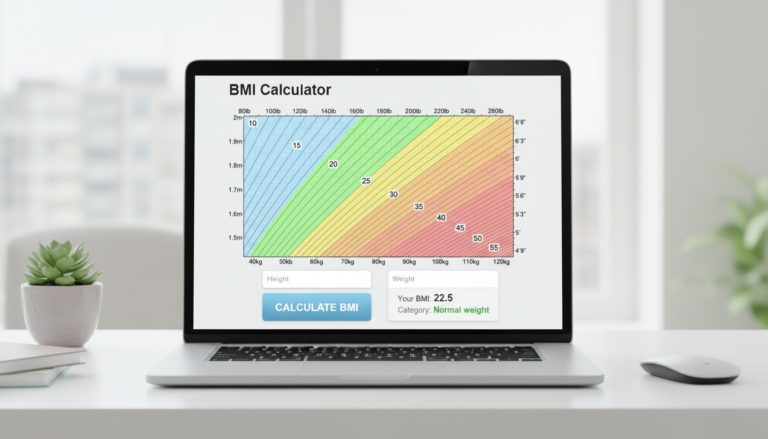
- BMI Calculator — check your body mass index
- BMR & TDEE Calculator — find your daily calorie needs
- Macro & Calorie Planner — plan your protein, carbs, and fat intake
- Fiber and Protein Calculator — get daily fiber and protein targets
- Free Weekly Meal Planner — build a 7-day plan and grocery list
Hamza Ahmad is a dedicated fitness and health researcher and the founder of Fit and Care. He specializes in translating evidence-based health science into practical, accessible guidance on nutrition, fitness, and wellness.