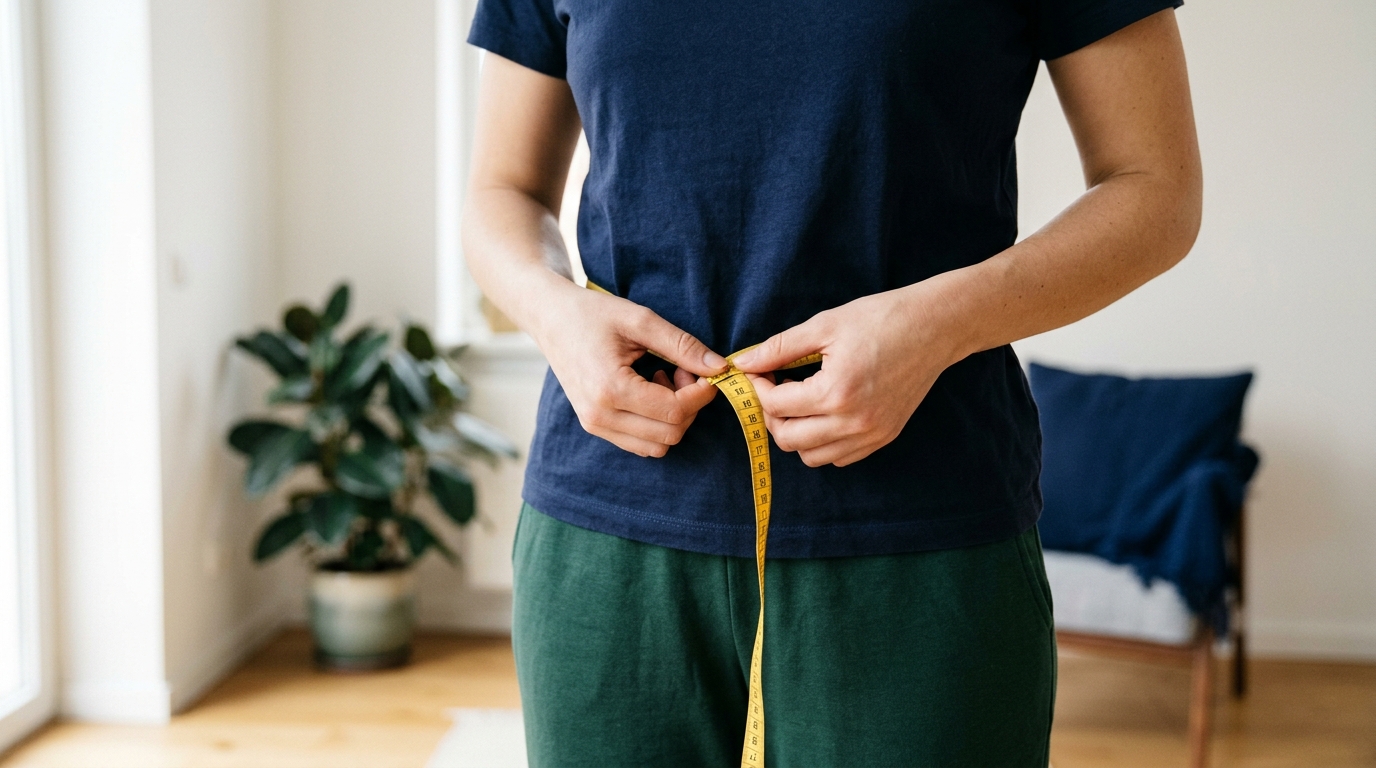
Body Fat Calculator (U.S. Navy Method) — Free Tool

This free body fat calculator estimates your body fat percentage in seconds using the U.S. Navy circumference method — just a tape measure and a few basic measurements.
⚠️ Important Medical Disclaimer
This article and calculator are for informational and educational purposes only and do not constitute medical advice. This tool provides an estimate only and is not a substitute for professional body composition testing (such as DEXA scans, hydrostatic weighing, or skinfold calipers) or advice from a qualified healthcare provider.
Your weight on the scale doesn’t tell the whole story. Two people can weigh exactly the same and have completely different body compositions — one carrying mostly muscle, the other carrying mostly fat. That’s where body fat percentage comes in: it tells you what portion of your total weight is actually fat, versus muscle, bone, water, and organs.
Use the body fat calculator below to estimate your body fat percentage using the U.S. Navy circumference method — one of the most widely used non-invasive estimation methods, requiring nothing more than a tape measure.
Table of Contents
Body Fat % Calculator
U.S. Navy tape-measure method — estimates body fat from waist, neck, height (and hip for women).
Tip: measure waist at the navel, neck just below the larynx, and (for women) hips at the widest point.
What Is Body Fat Percentage?
Body fat percentage is the proportion of your total body weight that comes from fat tissue. A body fat calculator like this one is considered a more useful indicator of fitness and health risk than BMI alone, because it accounts for the difference between fat mass and lean mass.
Lean mass includes muscle, bone, and water. This is exactly why two people with an identical BMI can look and perform completely differently — an athlete with a lot of muscle mass may have a "high" BMI while carrying very little fat, while a sedentary person with the same BMI may be carrying significantly more fat.
How to Use the Body Fat Calculator in 5 Steps
- Pick your units. Choose Metric (cm) or Imperial (inches) at the top of the body fat calculator.
- Select your sex. Women will see an extra hip field, because the formula uses a different equation.
- Measure with a flexible tape. Take your height, neck and waist (and hip for women) using the guide below.
- Enter your numbers. Double-check that your waist is larger than your neck measurement.
- Press Calculate. You will get your estimated body fat percentage and the category it falls into.
The whole process takes about two minutes. Write your result down along with the date so you can compare it with future measurements.
How This Body Fat Calculator Works
Developed for military fitness assessments, the Navy method estimates body fat using simple circumference measurements — no equipment beyond a flexible tape measure is required. It uses your height, neck, and waist (and hip for women), combined with a logarithmic formula validated against more expensive lab methods.
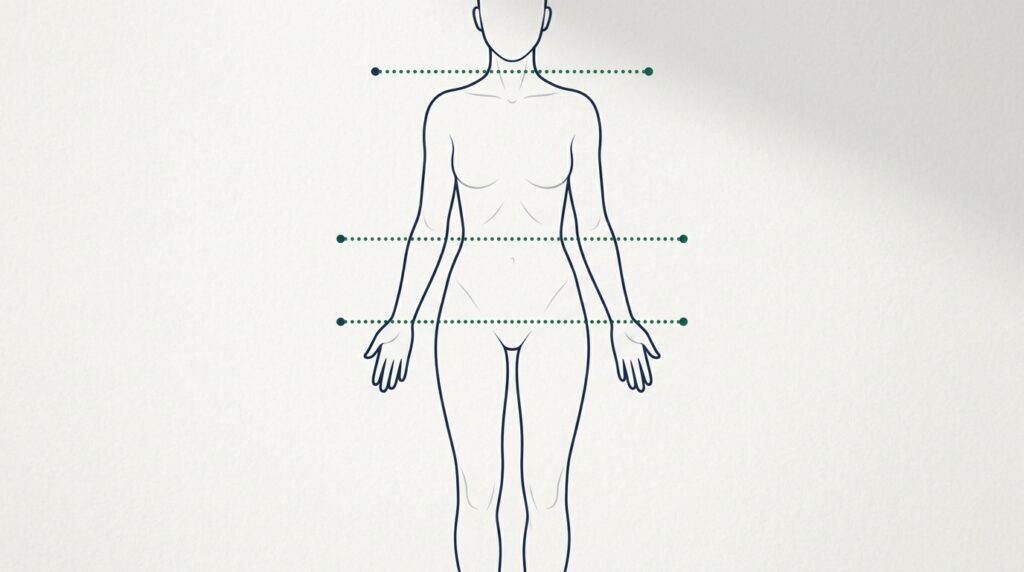
Where to Measure
- Neck: Just below the larynx (Adam's apple), tape sloped slightly downward toward the front
- Waist: At the navel, while standing relaxed (not sucking in)
- Hip (women only): At the widest point of the hips/glutes
For the most accurate result from this body fat calculator, measure in the morning, keep the tape snug but not compressing the skin, and take each measurement twice to confirm consistency.
Navy Method Formula and Worked Examples
For those who like to see the math, this body fat calculator uses the metric version of the U.S. Navy equations, with all measurements in centimeters:
- Men: body fat % = 495 / (1.0324 - 0.19077 x log10(waist - neck) + 0.15456 x log10(height)) - 450
- Women: body fat % = 495 / (1.29579 - 0.35004 x log10(waist + hip - neck) + 0.22100 x log10(height)) - 450
If you choose inches, the calculator converts them to centimeters first, so you get the same answer either way.
Example 1: a man
A man who is 180 cm tall with a 38 cm neck and a 90 cm waist has a waist-minus-neck value of 52 cm. Plugging that into the formula gives roughly 19.8% body fat, which lands in the Average range for men.
Example 2: a woman
A woman who is 165 cm tall with a 32 cm neck, a 78 cm waist and a 98 cm hip has a waist-plus-hip-minus-neck value of 144 cm. The body fat calculator returns roughly 30.4%, which falls in the Average range for women.
Body Fat Percentage Categories
Healthy body fat ranges differ by sex, since women naturally carry more essential fat than men for hormonal and reproductive health. According to the National Institute of Diabetes and Digestive and Kidney Diseases (NIDDK), body composition analysis gives a fuller picture of health than weight or BMI alone.
| Category | Men | Women |
|---|---|---|
| Essential Fat | 2–5% | 10–13% |
| Athletes | 6–13% | 14–20% |
| Fitness | 14–17% | 21–24% |
| Average | 18–24% | 25–31% |
| Obese | 25%+ | 32%+ |
Ranges adapted from the American Council on Exercise (ACE) body fat classification system.
Body Fat % vs. BMI: Which Should You Trust More?
Neither metric is perfect on its own — they answer different questions. BMI is a quick screening tool based only on height and weight, while a body fat calculator attempts to estimate actual composition. Used together, they give a much fuller picture than either alone.
| Measure | What It Shows | Limitation |
|---|---|---|
| BMI | Weight relative to height | Can't distinguish fat from muscle |
| Body Fat % | Estimated proportion of fat vs. lean mass | Tape-measure methods are estimates, not lab-grade |
How to Lower Body Fat Safely After Using the Calculator
Once the body fat calculator gives you a starting point, the goal is steady, sustainable progress rather than a crash diet. Losing roughly 0.25 to 0.5 kg (about half a pound to one pound) per week is a common, manageable pace for most adults.
- Lift weights or do resistance training two to three times a week to protect muscle while you lose fat. Our beginner workout plans are a good starting point.
- Eat in a modest calorie deficit. Find your maintenance calories with the BMR and TDEE calculator, then set targets with the Macro & Calorie Planner.
- Prioritize protein and fiber. Both keep you full. Check your numbers with the fiber and protein calculator and see our high-protein meal plan.
- Sleep and manage stress. Poor sleep and high stress can make hunger harder to control and recovery slower.
- Stay active every day. Walking adds up. The Japanese walking method is an easy way to add intensity.
If you have a medical condition, are pregnant, or have a history of disordered eating, talk to a doctor or registered dietitian before setting body fat goals.
How Often Should You Use a Body Fat Calculator?
Body fat changes slowly, so measuring once every two to four weeks is plenty. Measuring daily will mostly show you noise from hydration, meals and tape placement. For the most useful trend, measure at the same time of day, wear no clothing around the tape, and use the same method each time.
Pair your body fat calculator results with other signals, such as how your clothes fit, your strength in the gym and your energy levels. Together these tell a more complete story than any single number.
Limitations of the Navy Method
Like any estimation method, this body fat calculator has boundaries worth knowing:
- Accuracy depends heavily on precise, consistent measurement technique
- Less accurate for people with very high or very low muscle mass, such as bodybuilders
- Not validated for use during pregnancy
- Provides an estimate, not a diagnostic-grade measurement — DEXA scans and hydrostatic weighing remain the gold standard
Body Fat Calculator FAQ
How accurate is the body fat calculator?
The Navy method is a useful estimate, but it is usually less precise than DEXA scans or hydrostatic weighing. Results can be off by several percentage points depending on your build and how carefully you measure.
What is a healthy body fat percentage?
Using the American Council on Exercise ranges, about 14 to 24% is the fitness-to-average range for men and about 21 to 31% for women. Healthy levels vary with age, genetics and activity, so ask your doctor what is right for you.
Why do women need to enter a hip measurement?
Women naturally store more fat around the hips and thighs, so the Navy equation for women includes hip circumference to account for that difference.
Is body fat percentage better than BMI?
They answer different questions. BMI compares weight to height, while body fat percentage estimates how much of your weight is fat. Using both gives a fuller picture than either one alone.
Can I use this body fat calculator during pregnancy?
No. The Navy method has not been validated for pregnancy, and body measurements change naturally during this time. Ask your healthcare provider for guidance instead.
Why does my result change between measurements?
Small differences in tape position, posture, time of day and hydration can move your numbers by a centimeter or more, which changes the result. Measure twice and use the average.
Related Tools
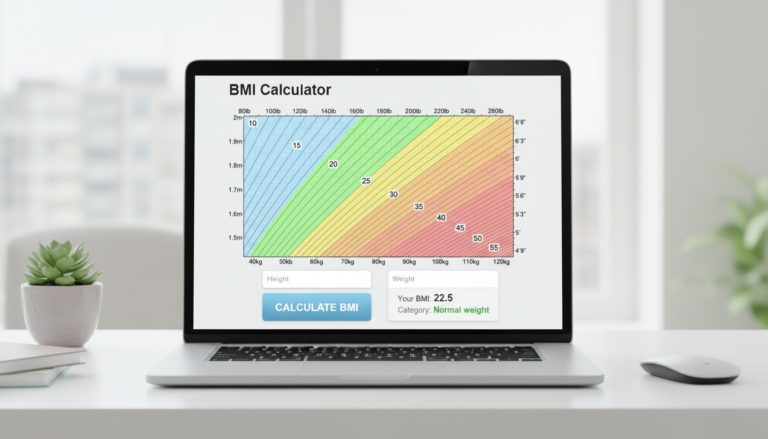
- BMI Calculator — check your body mass index alongside your body fat estimate
- BMR & TDEE Calculator — find your daily calorie needs
- Macro & Calorie Planner — plan your protein, carbs, and fat intake
Hamza Ahmad is a dedicated fitness and health researcher and the founder of Fit and Care. He specializes in translating evidence-based health science into practical, accessible guidance on nutrition, fitness, and wellness.