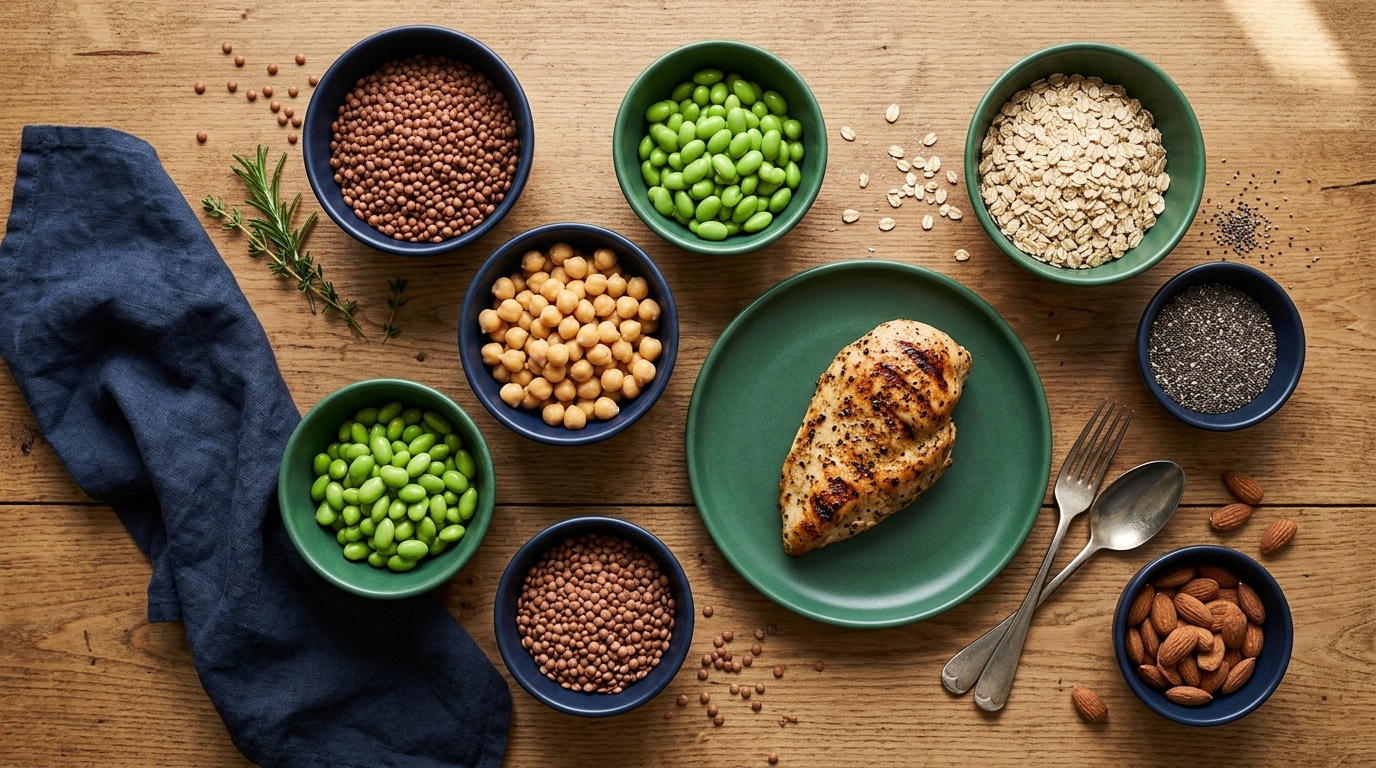
Fiber and Protein Calculator: Easy Daily Targets + Free Plan (2026)
Written by Hamza Ahmad | Updated October 2026
This free fibre and protein calculator shows you how many grams of fibre and protein to aim for each day, based on your age, sex, weight, activity level and goal. It also builds a week-by-week plan so you can raise your fibre without the bloating that comes from fibre maxing too fast.
Most adults eat far less fibre than recommended, and many people chase protein without thinking about fibre at all. Use the calculator below, then scroll down to see how the numbers are worked out and how to turn them into meals. If the trend is new to you, start with our complete fibre-maximising guide.

Table of Contents
Fiber and protein target calculator
Enter your details to get a daily fiber goal, a daily protein range, and a week-by-week plan to raise your fiber without bloating.
Your daily targets
Your fiber ramp-up plan
| Week | Fiber goal per day |
|---|
Add fiber gradually, drink more water as you go, and spread it across meals. Gas or bloating usually means you should hold at the current level for a few days.
Foods that deliver fiber and protein together
| Food (cooked unless noted) | Serving | Fiber | Protein |
|---|---|---|---|
| Lentils (dal) | 1 cup | about 16 g | about 18 g |
| Black beans | 1 cup | about 15 g | about 15 g |
| Chickpeas (chana) | 1 cup | about 12 g | about 14 g |
| Edamame, shelled | 1 cup | about 8 g | about 18 g |
| Green peas | 1 cup | about 9 g | about 8 g |
| Quinoa | 1 cup | about 5 g | about 8 g |
| Oats, dry | 1/2 cup | about 4 g | about 5 g |
| Chia seeds | 2 tbsp | about 10 g | about 5 g |
| Almonds | 1 oz (28 g) | about 3.5 g | about 6 g |
Values are approximate and vary by brand and preparation.
Frequently asked questions
How much fiber do I need each day?
The commonly used adult targets are 38 g for men and 25 g for women up to age 50, and 30 g and 21 g after 50. That works out to roughly 14 g of fiber per 1,000 calories eaten. Most adults get far less.
What is fibermaxxing, and is it safe?
Fibermaxxing is a social media trend of deliberately eating more fiber for gut health, fullness and steadier energy. It is safe for most healthy people when done gradually with plenty of fluids, but jumping from 15 g to 50 g overnight often causes gas and bloating.
How much protein do I need per day?
The RDA of 0.8 g per kg of body weight is the minimum to prevent deficiency. Active people, people losing fat, and older adults usually do better with about 1.2 to 2.2 g per kg depending on the goal, which is the range this calculator uses.
Can I eat too much fiber?
Very high intakes, especially if you raise them quickly or skip water, can cause gas, bloating, cramps and constipation, and may reduce absorption of some minerals. Increase by about 5 g per week, drink enough fluids and spread fiber across your meals.
What is the difference between soluble and insoluble fiber?
Soluble fiber (oats, beans, chia, apples) forms a gel that helps with cholesterol and blood sugar. Insoluble fiber (wheat bran, whole grains, vegetable skins) adds bulk and supports regularity. Most plant foods contain both, so variety matters more than counting each type.
Do I need a fiber supplement?
Food should come first because it also provides vitamins, minerals and protein. A supplement such as psyllium can help fill a gap, but start with a small dose and check with your doctor if you take regular medication.
Who should not rely on this calculator?
It gives general estimates for healthy adults. If you are pregnant or have kidney disease, IBS, IBD, diabetes or another medical condition, ask your doctor or a registered dietitian before changing your fiber or protein intake.
Educational tool only, not medical advice. Fiber targets follow the Dietary Reference Intakes; protein ranges reflect common sports nutrition guidance.
How this fibre and protein calculator works
The calculator uses two well-established sets of guidance. For fibre, it applies the Dietary Reference Intakes: 38 g a day for men and 25 g for women up to age 50, then 30 g and 21 g after 50. For protein, it multiplies your body weight in kilograms by a range that depends on your goal and activity level.
If you choose general health, your range is 0.8 to 1.2 g per kg when you are mostly sedentary or lightly active, and 1.2 to 1.6 g per kg when you are more active. Fat loss and muscle gain shift the range upward, reaching 1.6 to 2.2 g per kg for active people, because higher protein intake helps preserve lean mass. Adults aged 65 and over always get at least 1.0 to 1.4 g per kg.
Your Fibrefibre ramp-up plan starts from your current intake (or 15 g if you leave it blank) and adds about 5 g each week until you reach your goal.
How much fibre and protein do you need per day?
A 32-year-old woman weighing 70 kg with a moderate activity level gets a fibre target of 25 g and a protein range of 84 to 112 g. A 45-year-old man weighing 180 lb who trains six days a week and wants to lose fat gets 38 g of fibre and roughly 131 to 180 g of protein.
These are starting points, not strict rules. Appetite, digestion, training load and medical history all matter, so adjust slowly and pay attention to how you feel.
Daily fibre and protein targets by age, sex and goal
The tables below show the baseline numbers behind the fibre and protein calculator. Fibre follows the Dietary Reference Intakes, so it depends on your sex and age. Protein is shown per kilogram of body weight, so you can scale it to your own size and goal.
| Group | Daily fibre target |
|---|---|
| Women up to age 50 | 25 g |
| Women over 50 | 21 g |
| Men up to age 50 | 38 g |
| Men over 50 | 30 g |
| Goal | Sitting or light activity (g per kg) | Moderate to very active (g per kg) |
|---|---|---|
| General and gut health | 0.8 to 1.2 | 1.2 to 1.6 |
| Fat loss | 1.2 to 1.6 | 1.6 to 2.2 |
| Build muscle. | 1.4 to 1.8 | 1.6 to 2.2 |

Adults aged 65 and over are always given at least 1.0 to 1.4 g of protein per kg, because muscle becomes harder to maintain with age. Use the fibre and protein calculator above to turn these ranges into grams for your own body weight.

Why fibre and protein work well together
Protein is well known for helping you feel full, and fibre adds bulk and slows digestion. Eating both at each meal makes it easier to stay satisfied, whether you are trying to lose fat or build muscle.
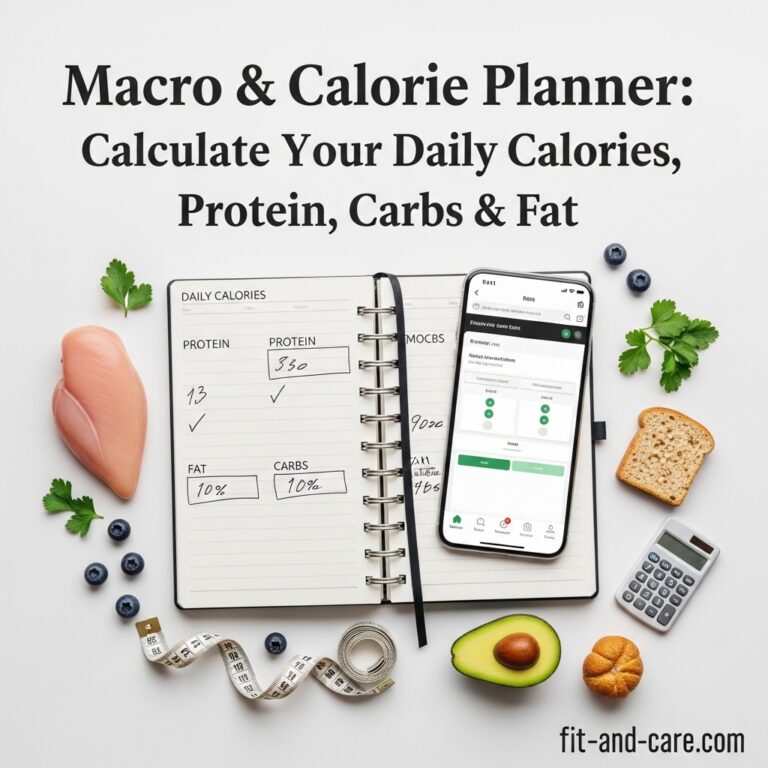
Beans, lentils, chickpeas, edamame and oats deliver both in the same food, which is why they lead the food table above. If you already track macros, our Macro & Calorie Planner can set your calorie, carb and fat targets to sit alongside your fibre and protein numbers.
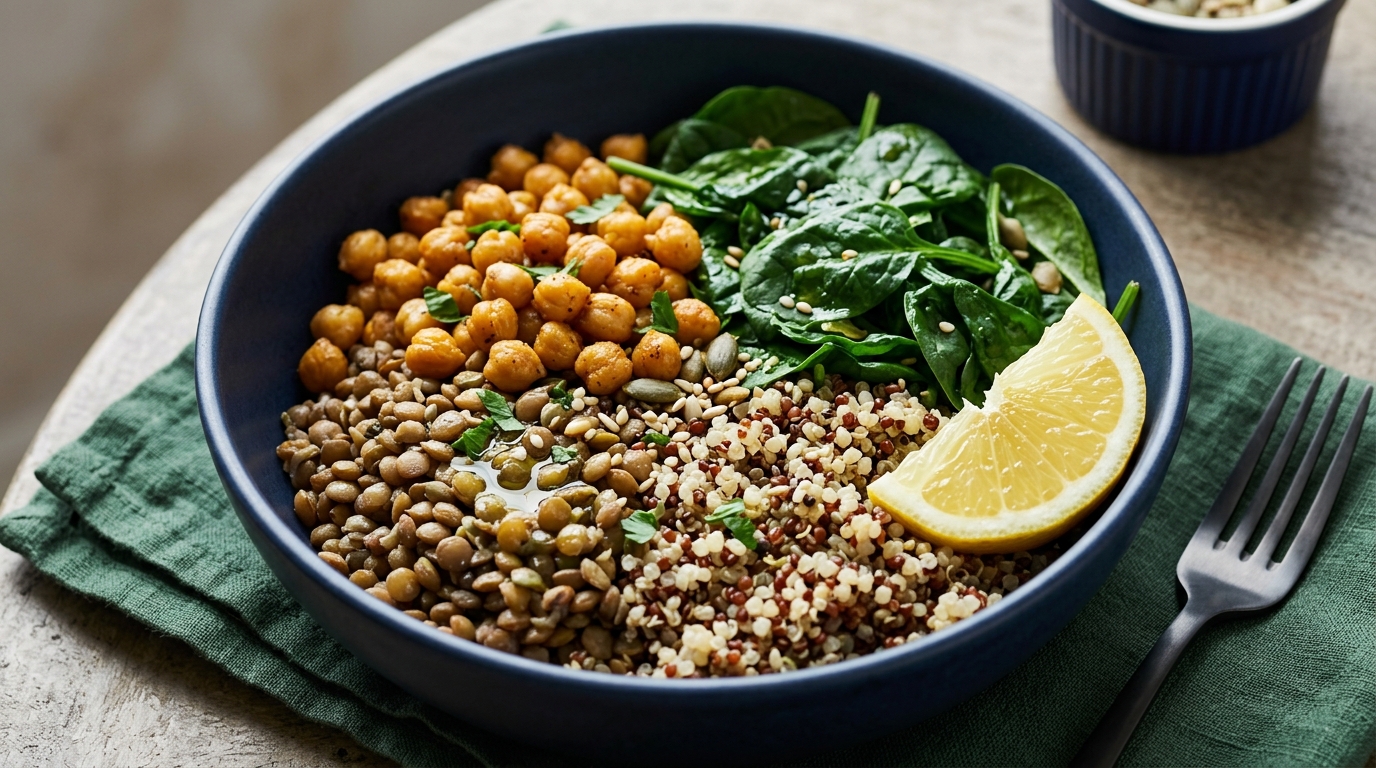
Fibre and protein calculator for weight loss
If you pick fat loss, the fibre and protein calculator raises your protein range to 1.2 to 1.6 g per kg when you are lightly active and 1.6 to 2.2 g per kg when you train regularly. Protein helps protect muscle while you eat fewer calories, and fibre slows digestion so meals stay filling for longer.
For example, a 75 kg woman who trains four times a week and wants to lose fat gets about 120 to 165 g of protein and 25 g of fibre a day. Split across three or four meals, that is roughly 36 to 48 g of protein per meal.
- Build each plate around a protein source plus a high-fibre food such as beans, lentils or vegetables.
- Swap refined grains for oats, quinoa, brown rice or whole-grain bread.
- Keep fluids up, especially when you raise fibre and cut calories at the same time.
- Pair your targets with a calorie goal from our Macro & Calorie Planner or our guide to controlling calorie intake.
Fibre and protein calculator for muscle gain
When you choose to build muscle, the fibre and protein calculator sets protein at 1.4 to 1.8 g per kg for light training and 1.6 to 2.2 g per kg for very active people. An 80 kg man aged 28 who trains six days a week would see about 128 to 176 g of protein and a fibre goal of 38 g.
Muscle-building diets often lean on meat, eggs and shakes, which contain almost no fibre. That is why the calculator shows both numbers side by side. Adding oats, beans, berries and vegetables keeps digestion comfortable when calories are high. A common rule of thumb is about 14 g of fibre per 1,000 calories, so someone eating 3,000 calories may feel better closer to 42 g than 38 g.
Sample day: a fibre and protein plan in real food
Numbers are easier to follow when you can see them on a plate. This sample day lands near 40 g of fibre and 109 g of protein, which fits a person whose fibre and protein calculator result is around 38 g and 100 to 130 g. Values are approximate and use the food table above.
| Meal | Foods | Fibre | Protein |
|---|---|---|---|
| Breakfast | 1/2 cup dry oats, Greek yoghurt, 1 oz almonds | about 8 g | about 26 g |
| Lunch | 1 cup cooked lentils with a side salad | about 19 g | about 20 g |
| Snack | 1 cup shelled edamame | about 8 g | about 18 g |
| Dinner | Grilled chicken breast with 1 cup quinoa | about 5 g | about 45 g |
| Total | about 40 g | about 109 g |
Prefer plant-based meals? Swap the chicken for tofu or tempeh, or browse our list of protein-rich foods for vegetarians. For gut-friendly ideas beyond fibre, see our guide to gut health and weight loss.
How to use your fibre and protein calculator results
- Split your protein across three or four meals, using the per-meal amount the calculator shows.
- Aim for roughly a third of your daily fibre at each main meal.
- Build your week around the foods in the table, or use our free weekly meal planner to turn them into a 7-day plan and grocery list.
- Need protein-focused ideas? See our high-protein meal plan for the week.
- Recalculate whenever your weight, activity level or goal changes.
How to raise fibre without bloating
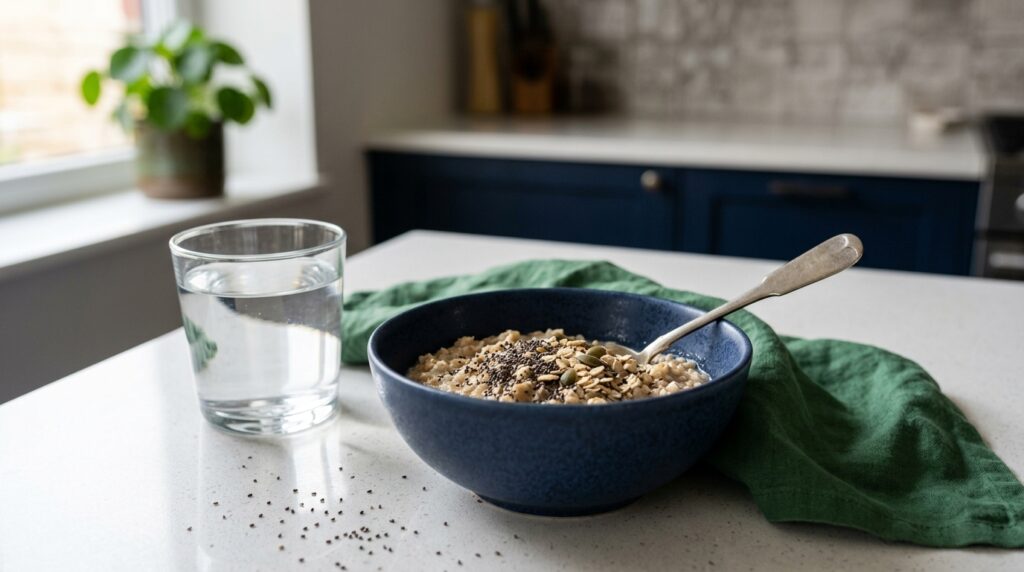
- Increase by about 5 g per week instead of jumping straight to your goal.
- Drink more water as your fibre goes up.
- Mix soluble sources (oats, beans, chia) with insoluble ones (whole grains, vegetables).
- Soak dried beans and rinse canned ones to make them easier to digest.
- If you feel uncomfortable, hold at your current level for a few days before going higher.
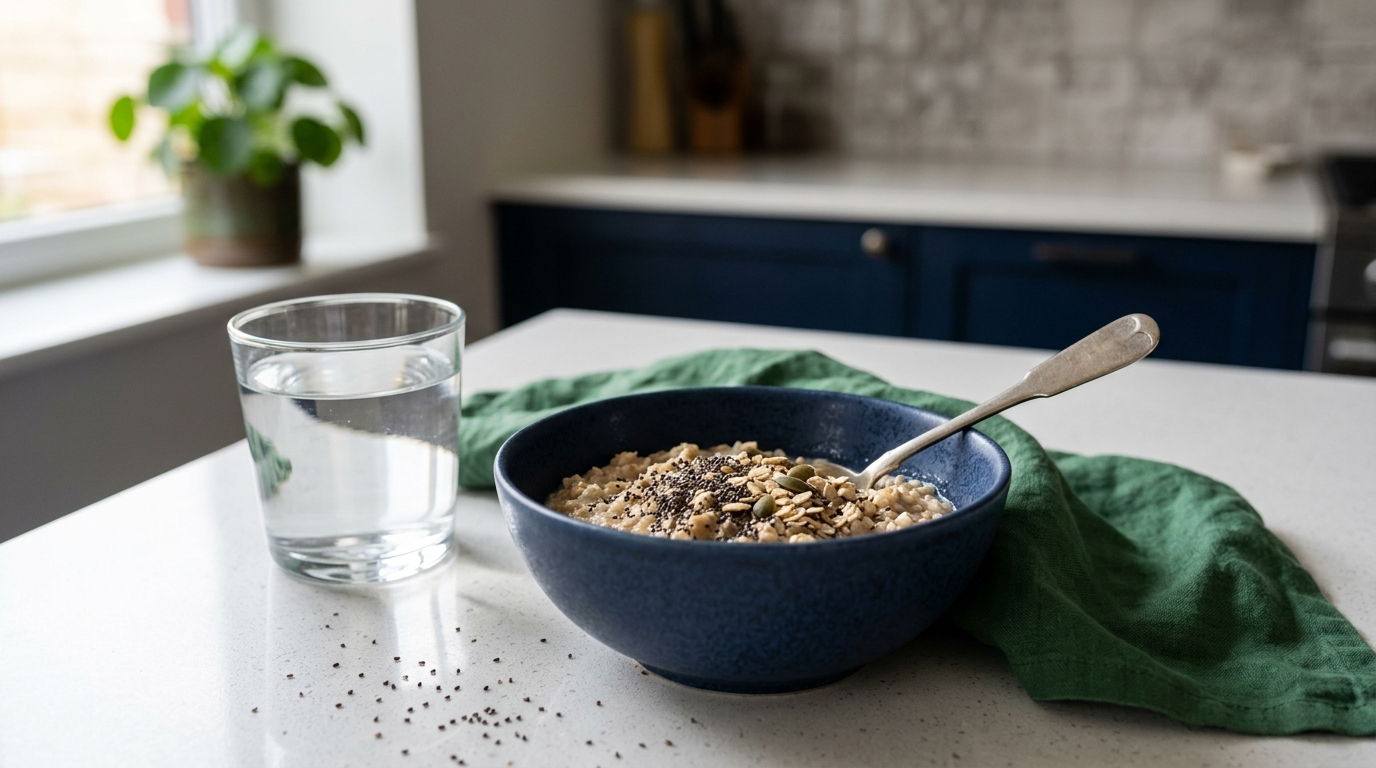
Common mistakes when using a fibre and protein calculator
- Jumping to your target overnight. Going from 15 g to 40 g of fibre in a day is the fastest route to gas and cramps. Follow the weekly ramp-up plan instead.
- Forgetting fluids. Fibre absorbs water, so a higher intake needs more water to keep things moving.
- Relying on powders and bars. Whole foods bring vitamins, minerals and a mix of fibre types that supplements do not.
- Treating the numbers as exact. The fibre and protein calculator gives evidence-based ranges, not a prescription. Appetite, training and digestion all shift what feels right.
- Never recalculating. Run the fibre and protein calculator again whenever your weight, activity level or goal changes.
Final thoughts
A fibre and protein calculator will not replace personal medical advice, but it gives you a clear, realistic starting point. For a deeper look at how fibre supports digestion, the Mayo Clinic has a helpful overview of dietary fibre. Come back to this fibre and protein calculator any time your goals change.

Hamza Ahmad is a dedicated fitness and health researcher and the founder of Fit and Care. He specializes in translating evidence-based health science into practical, accessible guidance on nutrition, fitness, and wellness.